What happens when you call
-
Tell us what happened. 30 seconds - where the water is and how bad.
-
You're connected with a local restoration crew while you're on the line.
-
The crew confirms timing and sets your arrival time with you directly.
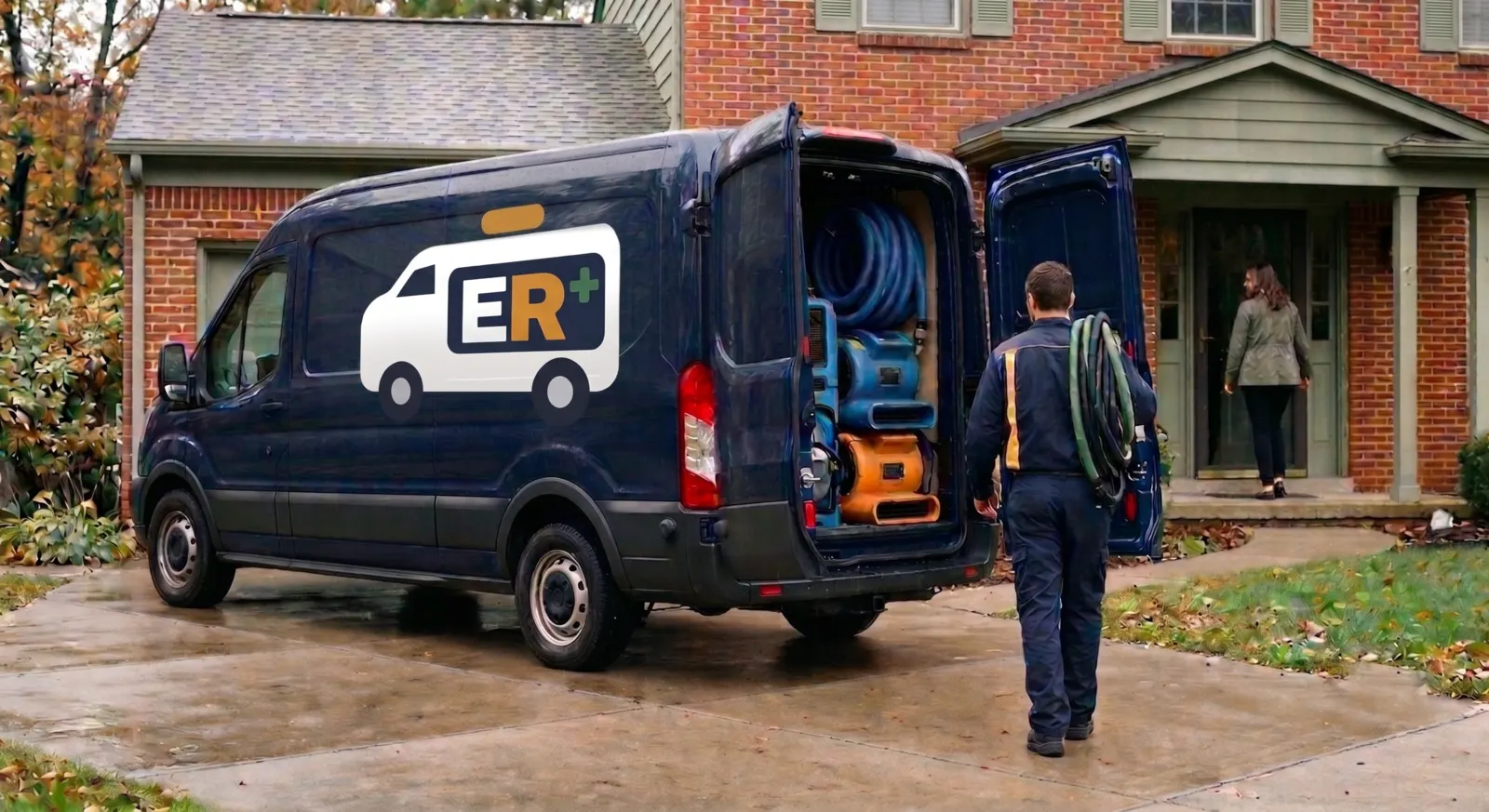
What do Denver crews handle?
- Burst & frozen pipes
- Flooded basements & crawl spaces
- Sewage backup & extraction
- Storm & roof-leak flooding
- Ceiling leaks & appliance failures
- Structural drying & dehumidification
Common emergencies in Denver
- Hail
- Blizzards
- Frozen pipes
- Wildfire smoke
What's different about water damage in Denver?
Denver sits in the most hail-battered metro in the country - spring storms punch roofs, and the ceiling leak shows up two rains later. Sixty-degree temperature swings work pipes hard, hard freezes burst them in uninsulated exterior walls, and the finished basements that come standard here turn any of it into a bigger loss. Wildfire seasons add smoke-odor calls even far from the fire line.
Colorado policies increasingly carry a separate wind/hail deductible - often a percentage of dwelling coverage rather than a flat number - while interior water losses use your standard deductible. One storm can trigger both. Check your declarations page before hail season.
Your call goes to a crew based in the Denver area. Serving Denver, Aurora, Lakewood, Arvada, Westminster, Centennial, and all of Denver County.
Repairing water damage in Denver: rules, homes, and who to call
Check Denver's Regulatory Floodplain map and FEMA's flood maps before repairs start. In flood zones A, AE, AH or AO, the city requires a floodplain permit for all construction, including interior repairs, and plans sealed by a Colorado-licensed engineer or architect. Denver then decides whether the job is a Substantial Improvement: construction cost above 50% of the building's current market value. It asks for a signed, dated cost estimate plus either the Assessor's actual value of improvements or an appraisal that lists building and land separately. If triggered, the whole building must meet Denver's flood standards, which put the lowest floor 18 inches above the 100-year flood level and do not allow basements in the floodplain. Citywide, drywall work beyond patching or replacing a single 4-by-8 sheet generally needs a building permit. Standard homeowners policies do not cover flood. For a city main break, call Denver Water.
Permits and licensing
Colorado licenses electricians and plumbers through state boards in the Department of Regulatory Agencies. Denver issues its own contractor licenses and does not accept other counties' or states' licenses; check contractors on the city's Contractor License Search. A homeowner can pull permits only for a single-family home they own and live in, and needs a city exam or state license for electrical, plumbing or HVAC work. Roof repairs over 10% of the roof or two roofing squares, whichever is smaller, need a roof permit. Inside Denver's regulatory floodplain, all construction, including interior repairs, needs a floodplain permit, and work costing more than 50% of the building's market value triggers full flood compliance. These are City and County of Denver rules; suburbs such as Aurora and Lakewood set their own.
How Denver homes are built
From Denver's Discover Denver surveys: Congress Park has nearly 1,000 Craftsman-style bungalows built between 1906 and 1929. Virginia Village is mostly ranch houses from about 1950 to the late 1960s, and one builder put up most of Harvey Park's homes between 1954 and 1958. Many homes in the 1945 Chaffee Park subdivision were built without basements, while many Athmar Park homes keep original windowless basements once advertised as fallout shelters.
When emergencies cluster
Spring brings both hail and heavy snow. NWS Boulder records a May 8, 2017 supercell with hail up to baseball size across Denver and the western suburbs, and a May 30, 2024 storm with baseball-size hail in northeast Denver. The March 13, 2019 bomb cyclone cut power to 445,000 customers; the March 13-14, 2024 storm dropped 10 to 18 inches on most of the metro.
Water and gas: who handles what
Denver Water maintains the mains; you own the service line and meter pit and must protect the meter from freezing. Report a leak or main break at 303-893-2444 weekdays 7:30 a.m. to 5:30 p.m., or 303-628-6801 after hours. Sewer emergencies: 303-446-3400. Gas is Xcel Energy: if you smell gas, leave without switching lights or using a phone inside, then call 911 and the gas emergency number on your bill.
Also serving nearby
Common questions
How fast can someone be here?
Our line is answered 24/7, and you're connected with a local restoration crew while you're on the call. The crew confirms timing and sets your arrival time with you directly.
Hail hit the roof and now the ceiling leaks - one claim or two?
Usually one storm claim, but the wind/hail deductible applies to it - often a percentage of your dwelling coverage. Document the storm date; adjusters match it to hail maps.
Is wildfire smoke odor covered?
Smoke damage from a nearby wildfire is often covered even when flames never reached your home. Coverage for cleaning and odor treatment depends on your policy's terms. Review your policy, including endorsements. Document the smoke damage.
Do I need a permit to fix hail damage on my Denver roof?
Yes, if the repair covers more than 10% of the roof area or two roofing squares, whichever is smaller. The roof permit is always separate from other building permits. Roofing on an individual landmark or a home in a historic district needs Landmark Preservation approval first. Before signing, check the roofer's Denver license on the city's Contractor License Search.
Can a roofer cover my hail deductible, and can I cancel the contract?
No: when insurance pays for the roof, Colorado law bars the roofer from paying, waiving or rebating any part of your deductible. The written contract must let you cancel within 72 hours of signing for a full deposit refund. You can usually also cancel within 72 hours of written notice that your insurer denied the claim in whole or part; the roofer must refund within 10 days, less work done.
Do I need an asbestos inspection before tearing out wet drywall?
Often, yes. In a single-family home, Colorado requires a state-certified asbestos building inspector to check materials before work disturbs more than 32 square feet of surface, 50 linear feet of pipe or a 55-gallon drum's volume. For parts built after October 12, 1988, an architect, engineer or certified inspector may sign a state exemption form instead. Removal may need a state notice or permit; emergencies can request a faster review.
Do you work with my insurance?
Many restoration contractors work with adjusters. Ask how billing works on the call, and ask the contractor about documentation and coordination with your adjuster. Sudden, accidental water damage is typically covered by homeowner's insurance. Review your policy, including endorsements.
What does it cost?
It depends on how far the water spread. Ask for a written scope and estimate before work starts. Sudden, accidental water damage is typically covered by homeowner's insurance. Review your policy, including endorsements.
What should I do while I wait?
If it's safe, shut off the water source and power to wet areas, and move valuables up off the floor. The crew handles the rest.