What happens when you call
-
Tell us what happened. 30 seconds - where the water is and how bad.
-
You're connected with a local restoration crew while you're on the line.
-
The crew confirms timing and sets your arrival time with you directly.
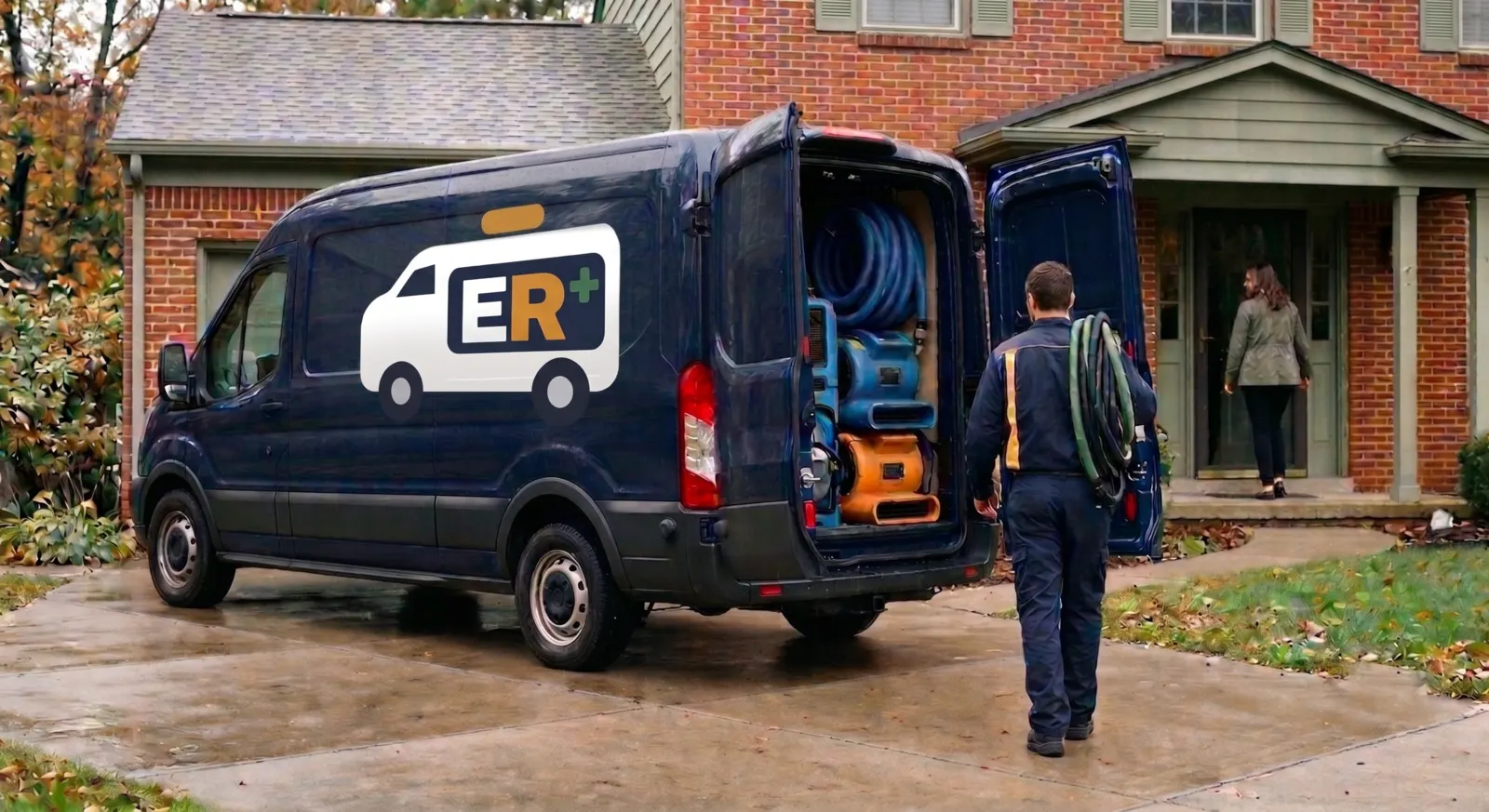
What do Chicago crews handle?
- Burst & frozen pipes
- Flooded basements & crawl spaces
- Sewage backup & extraction
- Storm & roof-leak flooding
- Ceiling leaks & appliance failures
- Structural drying & dehumidification
Common emergencies in Chicago
- Frozen pipes
- Basement & sewer flooding
- Severe thunderstorms
- Blizzards
What's different about water damage in Chicago?
Chicago basements are deep and usually finished - and much of Cook County drains through combined sewers that back up into them during heavy rain. Freeze-thaw cycles burst pipes in uninsulated exterior walls, ice dams push meltwater under roofs, and a dead sump or ejector pit turns an ordinary storm into a flooded basement in an hour.
In the Chicago area the coverage that surprises homeowners most is sewer backup - it's only covered with a water/sewer backup endorsement, an add-on many policies skip despite the combined sewer system. Check your declarations page before the next heavy rain.
Your call goes to a crew based in the Chicago area. Serving Chicago, Evanston, Cicero, Oak Park, Skokie, Berwyn, and all of Cook County.
Repairing water damage in Chicago: rules, homes, and who to call
In Chicago, start with 311. A 'water in basement' request sends a Department of Water Management sewer crew; have ready where the water is coming from (floor drain, toilet or shower), whether it is clean or dirty, and how many inches came in. It is not for water that came through windows. Stopping a leak needs no building permit, but replacing a water, drain or waste pipe does. If your home is in a FEMA special flood hazard area, check the flood map first: under Chicago's Chapter 16-6, repairs valued at 50% or more of the building's pre-damage market value mean the building must be protected from flood damage below the flood protection elevation the Department of Buildings sets, and no permit issues until that review is done. Illinois sellers must disclose known basement flooding or recurring leakage, and a floodplain location.
Permits and licensing
Illinois licenses roofing contractors through IDFPR, and a roofer's license number must appear on contracts, bids and building permits. Inside Chicago, a Department of Buildings general contractor license is required for most permitted construction and rehab work. Two exceptions matter: a single-trade job done by a Chicago-licensed trade contractor, such as an electrician, and an owner acting as general contractor on their own primary residence of up to six units and three stories, for one property per calendar year. Replacing up to 1,000 square feet of drywall or plaster with no plumbing, electrical or mechanical changes needs no permit. In a FEMA special flood hazard area, Chicago's flood control ordinance applies to repairs worth 50% or more of the building's pre-damage market value. Suburbs set their own rules.
How Chicago homes are built
The brick Chicago bungalow, built from about 1910 to the mid-1930s, sits one and a half stories over a full basement, according to the Chicago Bungalow Association. National Register bungalow districts are listed in Portage Park, Hermosa, Gage Park, Auburn Gresham, West Chatham and Talman West Ridge. The association counts more than 80,000 bungalows, nearly a third of the city's single-family homes.
When emergencies cluster
Basement floods cluster in summer downpours, when the combined sewers fill. On July 2, 2023, NWS logged 8.96 inches near Berwyn and 4.68 at Midway, flooding worst on the west and southwest sides. On July 8, 2025, a station near the United Center recorded about 5 inches in 90 minutes. Winter brings frozen pipes: O'Hare wind chills reached -28°F on January 21, 2025 and -36°F on January 23, 2026.
Water and gas: who handles what
Chicago's water mains and sewers belong to the Department of Water Management. Report a main break, water on the street or a sewer backup through 311, by phone or at 311.chicago.gov. Gas in the city is Peoples Gas: if you smell gas, leave right away and call 866-556-6002 from outside. For carbon monoxide, leave and call 911. Suburbs may use other utilities; use the number on your bill.
Also serving nearby
Common questions
How fast can someone be here?
Our line is answered 24/7, and you're connected with a local restoration crew while you're on the call. The crew confirms timing and sets your arrival time with you directly.
Is sewer backup covered in Chicago?
Only with a water/sewer backup endorsement - many Cook County policies skip it despite the combined sewers. Check your declarations page before the next heavy rain.
Is a failed sump pump covered?
The resulting water damage is typically covered only if your policy has a sump or water backup endorsement; replacing the failed pump itself often isn't covered either way. Review your policy, including endorsements. Check your declarations page for the endorsement's limit.
Do I need a permit to repair water damage in Chicago?
Often, but not always. No building permit is needed to stop a leak, remove debris, or replace up to 1,000 square feet of drywall or plaster without changing plumbing, electrical or mechanical systems. Replacing pipe, rewiring or larger tear-outs need one. Work needed to prevent imminent harm can start first, but a permit application is due to the Department of Buildings the next business day.
What paperwork should a contractor give me before work starts?
For work over $1,000, Illinois requires a written contract listing the total cost, parts and materials, and the business name and address, plus the 'Home Repair: Know Your Consumer Rights' pamphlet, which you sign and keep. If you sign at home, the Attorney General says you have three business days to cancel, or 15 if you are over 65. Roofers must show an IDFPR license number.
Who do I call when sewage backs up into my Chicago basement?
Report it to 311 as 'water in basement' so the Department of Water Management can send a sewer crew to check the city side. Have ready the address, the source (floor drain, toilet or shower), whether the water is clean or dirty, and how deep it is. Stay out of standing water near outlets or appliances, and photograph the water line before cleanup.
Do you work with my insurance?
Many restoration contractors work with adjusters. Ask how billing works on the call, and ask the contractor about documentation and coordination with your adjuster. Sudden, accidental water damage is typically covered by homeowner's insurance. Review your policy, including endorsements.
What does it cost?
It depends on how far the water spread. Ask for a written scope and estimate before work starts. Sudden, accidental water damage is typically covered by homeowner's insurance. Review your policy, including endorsements.
What should I do while I wait?
If it's safe, shut off the water source and power to wet areas, and move valuables up off the floor. The crew handles the rest.