What happens when you call
-
Tell us what happened. 30 seconds - where the water is and how bad.
-
You're connected with a local restoration crew while you're on the line.
-
The crew confirms timing and sets your arrival time with you directly.
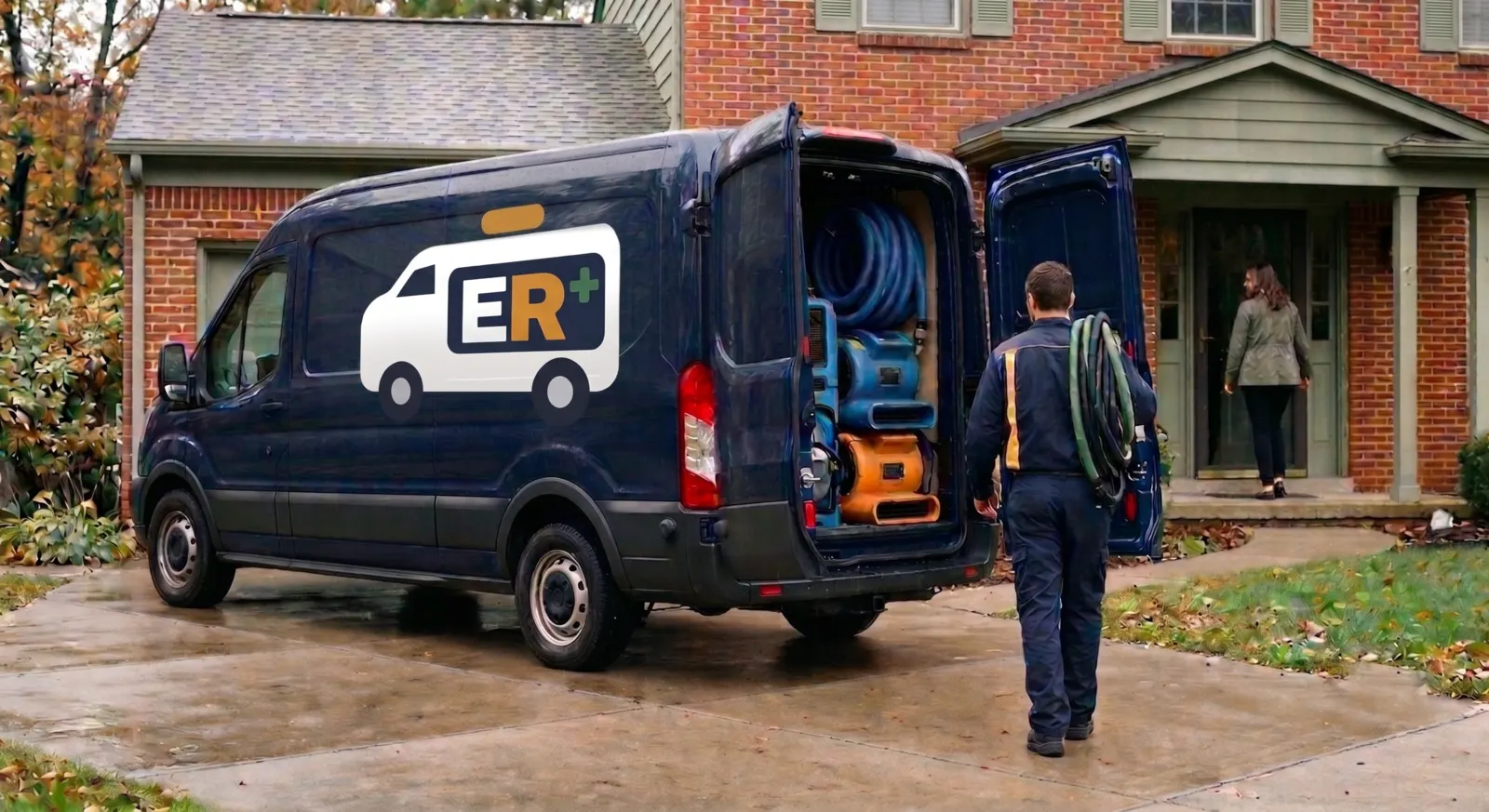
What do St. Louis crews handle?
- Burst & frozen pipes
- Flooded basements & crawl spaces
- Sewage backup & extraction
- Storm & roof-leak flooding
- Ceiling leaks & appliance failures
- Structural drying & dehumidification
Common emergencies in St. Louis
- Tornadoes
- Flash flooding
- Frozen pipes
What's different about water damage in St. Louis?
St. Louis takes water from every direction - river flooding on the big years, flash-flooding downpours in between, and a brick housing stock whose century-old supply lines fail on their own schedule. Humid summers grow mold fast in wet basements, and spring severe-weather season adds roof and tornado damage to the mix.
Missouri policies cover sudden failures and storm openings; river or street water needs flood insurance, and sewer backup - common when downpours overwhelm older lines - needs its own endorsement. Wind and hail are standard perils, sometimes with their own deductible.
Your call goes to a crew based in the St. Louis area. Serving St. Louis, Clayton, Florissant, Chesterfield, Kirkwood, St. Charles, and all of St. Louis City & County.
Repairing water damage in St. Louis: rules, homes, and who to call
In St. Louis, where the water came from decides who helps pay. The city is served by a combined sewer, where storm water and sewage share one pipe. When heavy rain overloads the public sewer and it backs up into a building, MSD says it will reimburse up to $3,000, minus a $100 deductible, if you contact it within 30 days. Backups from a blocked public sewer are reimbursed for adjusted losses. Water that comes through doors, windows or foundation cracks is overland flooding, not a backup, and MSD leaves it to the homeowner, as it does problems in your own lateral line. Photograph damage before cleanup. Replacing water supply lines, soil stacks or sewer laterals needs a city plumbing permit. If the home sits in a FEMA flood area, ask the city about a Floodway Development Permit before repairs start.
Permits and licensing
Missouri offers a statewide electrical contractor license but lists no state license for general contractors, roofers, plumbers or mold remediators. Inside the City of St. Louis, city boards of examiners license plumbers, drainlayers and electrical workers, and the Building Division issues plumbing and electrical permits to city-licensed contractors. An owner-occupant of a single-family home can get an electrical permit for repairs after passing a short city test. A building permit is needed for a whole new roof, roofing that is not like-for-like, replacing more than 25% of roof sheathing, or moving partitions or structural beams. In a FEMA-mapped flood area, the city requires a Floodway Development Permit even when no building permit is. Historic districts add Cultural Resources Office review. County suburbs like Clayton set their own rules.
How St. Louis homes are built
The city's Cultural Resources Office describes Soulard's buildings as two-story brick structures from the mid to late 1800s, set at the street on narrow lots. Most Lafayette Square houses predate 1900, with limestone, sandstone or plaster fronts and brick side and rear walls. Benton Park holds some of the oldest structures remaining in the city, and most of Shaw was developed between 1890 and 1915.
When emergencies cluster
NWS St. Louis records show hazards in every season: December 26-28, 2015 brought 9.18 inches and St. Louis's wettest December on record. July 26, 2022 set an all-time daily record of 8.64 inches at Lambert, with a Flash Flood Emergency for parts of the city. An EF3 tornado crossed north city on May 16, 2025, and January 4-6, 2025 brought up to 8.5 inches of snow to the city.
Water and gas: who handles what
In the city, water comes from the City of St. Louis Water Division. Report running water or water coming up from the street to the Citizens' Service Bureau online or at 314-622-4800. Sewers belong to MSD; report a building backup at 314-768-6260. Gas is Spire: if you smell gas, leave the area right away, then call Spire's 24/7 line at 800-887-4173 or call 911.
Also serving nearby
Common questions
How fast can someone be here?
Our line is answered 24/7, and you're connected with a local restoration crew while you're on the call. The crew confirms timing and sets your arrival time with you directly.
Flash flood came in the window wells - covered?
Rising outside water is flood insurance, not homeowner's - even a few inches through a window well. Water from your own plumbing is the standard claim.
Storm tore the roof and rain got in - covered?
Typically yes. Wind damage and the rain that enters through it are commonly covered perils. Once it's safe, tarp the opening - most policies require reasonable steps to prevent further damage. Review your policy, including endorsements.
My basement backed up during a storm in St. Louis. Will MSD help pay?
It depends on the cause. If an overloaded public sewer caused it, MSD says it reimburses up to $3,000 with a $100 deductible, and you must contact MSD within 30 days at 314-768-6260. Water through windows, doors or foundation cracks is overland flooding, and lateral-line problems are the owner's, so MSD does not cover those. A sewer backup endorsement may cover more; check your policy.
Do I need a permit to replace a storm-damaged roof in the City of St. Louis?
A whole new roof, a switch to a different material, or replacing more than 25% of the roof sheathing needs a building permit. Like-for-like replacement with 25% or less of the sheathing usually does not. In a city historic district, the Cultural Resources Office may still require approval for related exterior work such as gutters, windows and doors.
Is there a state mold certificate I should get after remediation in Missouri?
No. Missouri's professional registration division lists no mold license, and the state health department says neither Missouri nor the federal government certifies mold testers. Since no state form exists, ask for a written scope of work, before-and-after photos, and confirmation that the moisture source was repaired. Those records can support an insurance claim, but they do not decide one.
Do you work with my insurance?
Many restoration contractors work with adjusters. Ask how billing works on the call, and ask the contractor about documentation and coordination with your adjuster. Sudden, accidental water damage is typically covered by homeowner's insurance. Review your policy, including endorsements.
What does it cost?
It depends on how far the water spread. Ask for a written scope and estimate before work starts. Sudden, accidental water damage is typically covered by homeowner's insurance. Review your policy, including endorsements.
What should I do while I wait?
If it's safe, shut off the water source and power to wet areas, and move valuables up off the floor. The crew handles the rest.