What happens when you call
-
Tell us what happened. 30 seconds - where the water is and how bad.
-
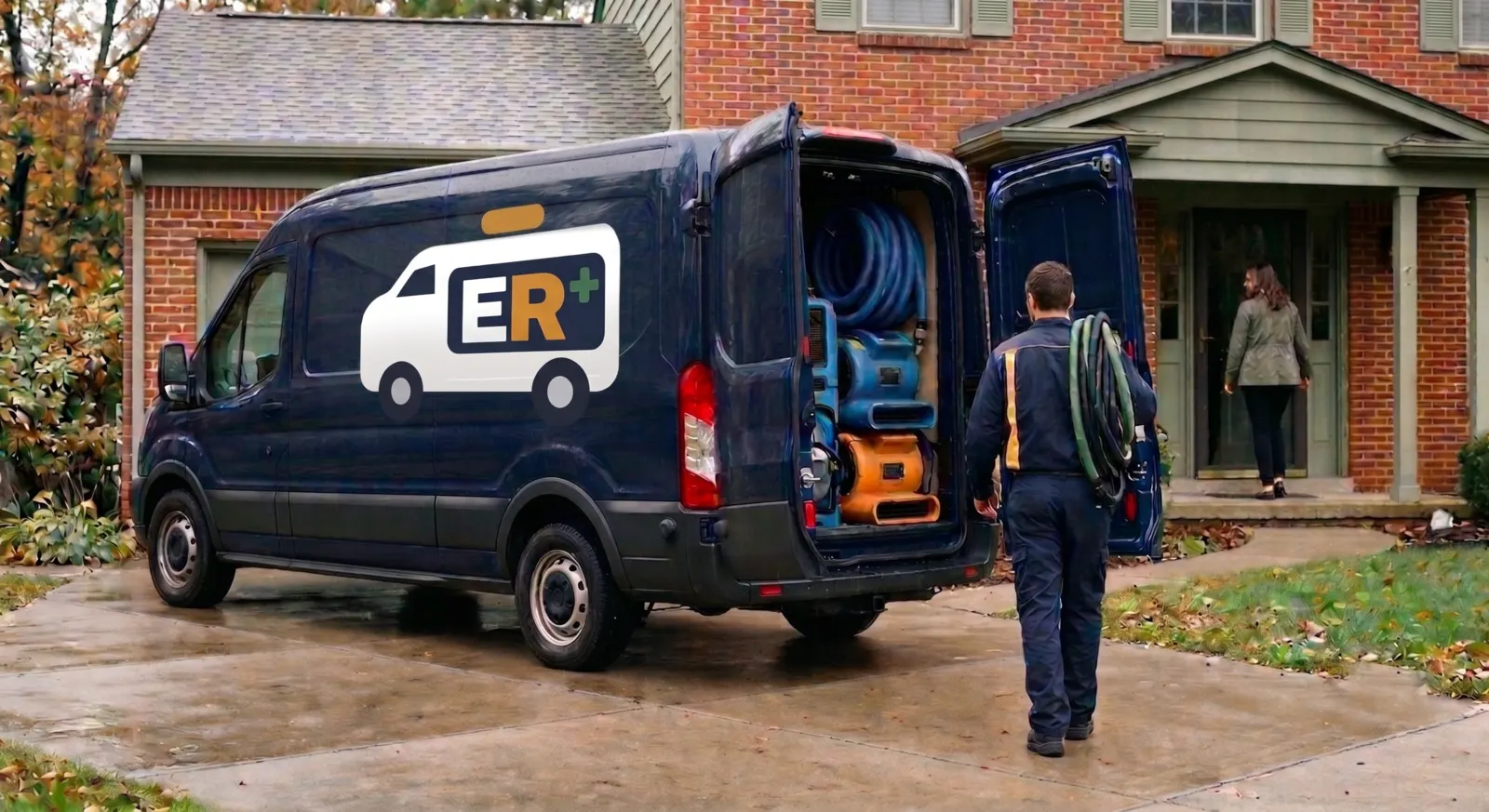
You're connected with a local restoration crew while you're on the line.
-
The crew confirms timing and sets your arrival time with you directly.
What do Washington crews handle?
- Burst & frozen pipes
- Flooded basements & crawl spaces
- Sewage backup & extraction
- Storm & roof-leak flooding
- Ceiling leaks & appliance failures
- Structural drying & dehumidification
Common emergencies in Washington
- Flash flooding
- Severe thunderstorms
- Frozen pipes
- Tropical storm remnants
What's different about water damage in Washington?
DC rowhouses put finished living space below grade, and the city's older combined sewers back up into those basements when summer downpours hit. English basements flood street-first, flat roofs pond, and the region's swampy humidity means anything left damp grows mold quickly - especially behind plaster walls that dry slowly.
District policies cover sudden pipe and appliance failures; water backing up from sewers or drains - the classic DC basement loss - needs its own endorsement. Rising street water is flood insurance, a separate policy, even when it only reaches the areaway door.
Your call goes to a crew based in the Washington area. Serving Washington, Arlington, Alexandria, Bethesda, Silver Spring, Hyattsville, and all of the District.
Repairing water damage in Washington: rules, homes, and who to call
Check your address at dcfloodrisk.org, DOEE's flood risk tool, before signing a repair contract. DC's flood hazard rules, updated in June 2025, cover the 500-year floodplain as well as the 100-year floodplain, and DOEE reviews repair permits in those areas. Work is a substantial improvement if its cost, plus work done in the previous five years, reaches 50% of the structure's tax-assessed value; the whole building must then be elevated or floodproofed. Smaller repairs count too: a replacement furnace, outlets or water lines below the design flood elevation must be flood resistant or raised. DOEE requires a cost estimate of the repairs for these permits. For a sewer backup, call DC Water first. If its main is clear, you pay a registered master plumber to clear your lateral, and DC Water says it generally does not pay for backup cleanup. DOEE's FloodSmart Homes pilot offers free home flood-resilience assessments.
Permits and licensing
DC's Department of Licensing and Consumer Protection (DLCP) licenses contractors. Home repair and remodeling calls for a Home Improvement Contractor or General Contractor license, and electricians, plumbers, gasfitters and refrigeration and air conditioning mechanics need their own trade licenses. Licensed home improvement contractors must give you a written contract, and only they may accept payment before the job is finished. Permits come from the Department of Buildings (DOB). Interior alterations, finished basements, sump pumps and new or replacement HVAC and gas appliances need one. Outside historic districts, replacing up to 160 square feet of ordinary drywall does not. In a flood hazard area, DOEE also reviews the permit. These are District rules; Arlington, Alexandria, Bethesda and Silver Spring follow Virginia or Maryland law.
How Washington homes are built
The Office of Planning says Bloomingdale was built almost entirely between 1892 and 1916, mostly as brick and stone rowhouses. Its Capitol Hill brochure describes cohesive rows of 19th-century brick row houses, many in the Queen Anne style. DC Water says an undersized 19th-century sewer system contributed to chronic flooding in Bloomingdale and LeDroit Park for decades. Its Northeast Boundary Tunnel, running since September 2023, was built to reduce it.
When emergencies cluster
Heavy summer thunderstorms cause sudden street and basement flooding, and winter storms bring heavy snow. NWS recorded 2 to 5 inches of rain, mostly within two hours, on September 10, 2020, and a 70 mph gust at Reagan National in the June 29, 2012 derecho. Reagan National measured 7.2 inches of snow on January 5-6, 2025, and preliminary NWS reports showed 17.8 inches there in the February 5-6, 2010 storm.
Water and gas: who handles what
DC Water runs water and sewer: report a main break or sewer backup to its 24-hour emergency line, (202) 612-3400, or online. The sewer lateral serving your house is yours to maintain. Gas is Washington Gas. If you smell gas, leave right away, leaving doors and windows open if you can, and do not flip switches or use phones inside. Once safe, call 911, then 844-WASHGAS (927-4427), option 1.
Also serving nearby
Common questions
How fast can someone be here?
Our line is answered 24/7, and you're connected with a local restoration crew while you're on the call. The crew confirms timing and sets your arrival time with you directly.
My English basement flooded in a storm - is that covered?
It depends on the path: sewer backup needs a backup endorsement, street water needs flood insurance, and a burst pipe is standard coverage. Photos of where the water came in help show which one happened.
How fast does mold appear in DC humidity?
Damp drywall can show growth inside 48 hours in a DC summer. Same-day drying is the difference between a dry-out and a remediation.
Do I need a permit to repair a flooded basement in DC?
Often yes. DOB lists interior alterations, including finished basements, plus sump pumps and new or replacement HVAC and gas appliances as permit work. Outside historic districts, replacing up to 160 square feet of ordinary drywall needs no building permit. Only contractors licensed in that trade can apply for plumbing, electrical and HVAC permits. If the house is in a flood hazard area, DOEE reviews the permit too.
I own and live in my rowhouse. Do I need a licensed mold professional?
Not by law. DOEE says homes occupied only by the owner, with no tenants, do not need a licensed mold professional, though it recommends one. If you rent out any part of the house, such as an English basement unit, mold covering more than 10 square feet requires a DOEE-licensed professional. Smaller areas can be handled using DOEE's guidance document.
My house is only in the 500-year floodplain. Do DC's flood rules apply to my repairs?
They can. Since June 2025, the 500-year floodplain is a regulated flood hazard area. For a detached one- or two-family home or a townhouse up to three stories, wholly outside the 100-year floodplain, repairs under $200,000 are exempt from the substantial improvement test, and DOEE may adjust that figure yearly. Interior-work rules may still apply, so call DOEE at (202) 535-2600 first.
Do you work with my insurance?
Many restoration contractors work with adjusters. Ask how billing works on the call, and ask the contractor about documentation and coordination with your adjuster. Sudden, accidental water damage is typically covered by homeowner's insurance. Review your policy, including endorsements.
What does it cost?
It depends on how far the water spread. Ask for a written scope and estimate before work starts. Sudden, accidental water damage is typically covered by homeowner's insurance. Review your policy, including endorsements.
What should I do while I wait?
If it's safe, shut off the water source and power to wet areas, and move valuables up off the floor. The crew handles the rest.