What happens when you call
-
Tell us what happened. 30 seconds - where the water is and how bad.
-
You're connected with a local restoration crew while you're on the line.
-
The crew confirms timing and sets your arrival time with you directly.
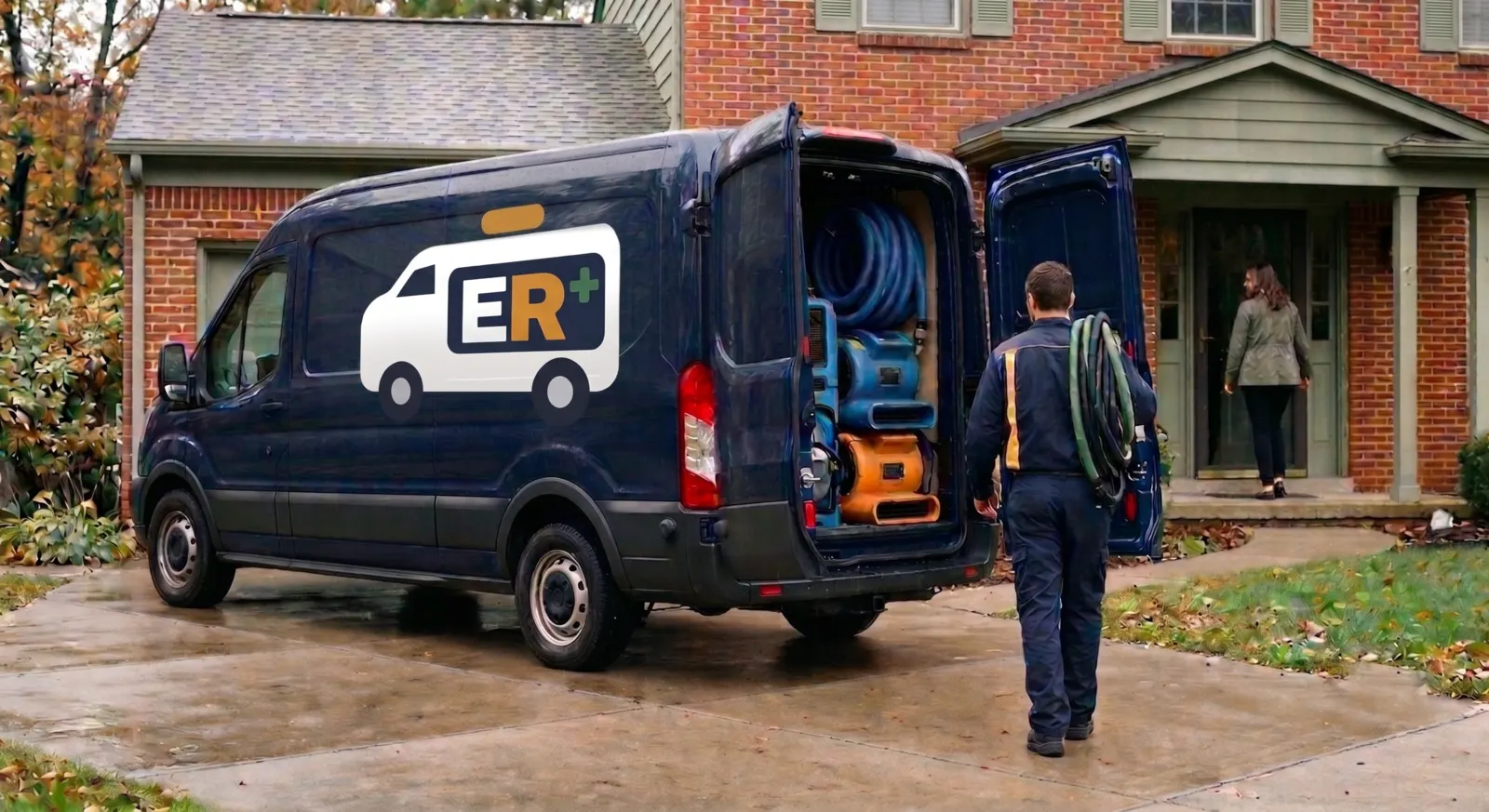
What do Cleveland crews handle?
- Burst & frozen pipes
- Flooded basements & crawl spaces
- Sewage backup & extraction
- Storm & roof-leak flooding
- Ceiling leaks & appliance failures
- Structural drying & dehumidification
Common emergencies in Cleveland
- Frozen pipes
- Lake-effect snow
- Ice dams
- Basement & sewer backups
What's different about water damage in Cleveland?
Cleveland's century homes and doubles carry original galvanized lines and stone foundations, and lake-effect winters test both - deep freezes burst pipes in uninsulated walls while ice dams work the rooflines. The metro's older combined sewers back up into basements when storms train off Lake Erie, and spring melt keeps sump pumps honest.
In Ohio the coverage that catches homeowners out is sewer and sump backup - both need their own endorsement, an add-on many policies skip. Sudden pipe and appliance failures fall under the standard policy; frozen pipes are covered when the home was reasonably heated.
Your call goes to a crew based in the Cleveland area. Serving Cleveland, Parma, Lakewood, Euclid, Strongsville, Mentor, and all of Cuyahoga County.
Repairing water damage in Cleveland: rules, homes, and who to call
Cleveland says painting and minor repairs need no permit, but plumbing, electrical and HVAC work and basement finishing do, so ask Building and Housing about a permit before you rebuild a flooded basement. If your home is in a FEMA special flood hazard area, the city's Flood Plain Management chapter applies. After a flood, fire or other damage, the Director of Building and Housing, acting as floodplain administrator, decides whether a home is substantially damaged: restoring it would cost 50% or more of its market value before the damage. A substantially damaged home needs a floodplain development permit before repairs and must meet the chapter's standards. The city uses FEMA maps effective August 15, 2019. Keep dated photos, moisture readings and invoices; Ohio's seller disclosure form asks about past flooding, ice damming and sewer backup, and what was repaired. For a broken city main, call Cleveland Water's 24/7 line, 216-664-3060.
Permits and licensing
Ohio licenses electrical, plumbing, HVAC, refrigeration and hydronics contractors through the Ohio Construction Industry Licensing Board, but that law's definition of a construction project excludes residential buildings. Inside Cleveland, contractors who build or rehabilitate homes must be bonded, insured and registered with the Department of Building and Housing, and electrical, plumbing and HVAC contractors need a state license before they can register. Painting and minor repairs need no permit; reroofing, siding, windows, basement finishing and electrical, plumbing and HVAC work do. In a FEMA special flood hazard area, Cleveland's Chapter 3167 adds a floodplain development permit, and repairs costing 50% or more of the structure's pre-damage market value count as substantial damage. These are City of Cleveland rules; suburbs set their own.
How Cleveland homes are built
Cleveland's housing is old. Case Western Reserve's Encyclopedia of Cleveland History says developers' houses were almost always wooden and typically two and a half stories, and that around World War I the typical form became a two-family house with identical floors, often called the 'Cleveland double.' By the 1980s, 68% of Tremont's housing had been built before 1900.
When emergencies cluster
Winter brings frozen pipes and main breaks; Cleveland Water says breaks rise the longer cold weather lasts. Cleveland hit -11°F on January 6 and 7, 2014, breaking 1884 records. Summer storms flood basements: on August 23, 2023, backyard gauges near Lakewood caught 3 to 4 inches in a couple of hours, flooding basements and closing I-90. On August 6, 2024, storms and EF-1 tornadoes left over 400,000 residents without power.
Water and gas: who handles what
Water is Cleveland Water, part of the city's Department of Public Utilities: report a main break or leak to its 24/7 emergency line, 216-664-3060. Sewer problems go to Water Pollution Control's customer service line, 216-664-2513, which says it answers around the clock. Gas is Enbridge Gas Ohio. If you smell gas, leave right away and avoid switches and phones, then call 911 and Enbridge at 1-877-542-2630 from a safe place.
Also serving nearby
Common questions
How fast can someone be here?
Our line is answered 24/7, and you're connected with a local restoration crew while you're on the call. The crew confirms timing and sets your arrival time with you directly.
Is basement sewer backup covered in Cleveland?
Only with a sewer/water backup endorsement - one of the most-skipped, most-needed add-ons in Cuyahoga County. Check your declarations page before the next lake-effect storm.
Ice dam leak in a century home - covered?
The interior water damage typically is. Plaster walls hold moisture longer than drywall, so professional drying matters more here, not less.
Do I need a permit to repair water damage in Cleveland?
Cleveland says painting and minor repairs need no permit. Plumbing, electrical and HVAC work, reroofing, siding, windows and basement finishing do. Contractors must be bonded, insured and registered with Building and Housing, and electrical, plumbing and HVAC contractors need a state license first. Owners of one- and two-family homes may do the work without registering but still need permits and inspections.
Can I cancel a repair contract I signed at my door after a storm?
Usually, yes, if the seller came to you. Ohio's home solicitation law lets you cancel until midnight of the third business day, and the contract cannot waive that right. The law does not cover a job where you called a company and asked it to come make repairs, or a true emergency where you made contact and signed a separate, dated, handwritten statement waiving the right.
My Cleveland house was built before 1978. Does water-damage tear-out raise lead issues?
It can. Federal EPA rules require anyone paid to disturb paint in pre-1978 housing to be certified, unless the job disturbs six square feet or less per room inside or 20 square feet or less outside. Demolition of painted surfaces is always covered, whatever the size. Ask to see the firm's lead-safe (RRP) certification before wet plaster or drywall comes down.
Do you work with my insurance?
Many restoration contractors work with adjusters. Ask how billing works on the call, and ask the contractor about documentation and coordination with your adjuster. Sudden, accidental water damage is typically covered by homeowner's insurance. Review your policy, including endorsements.
What does it cost?
It depends on how far the water spread. Ask for a written scope and estimate before work starts. Sudden, accidental water damage is typically covered by homeowner's insurance. Review your policy, including endorsements.
What should I do while I wait?
If it's safe, shut off the water source and power to wet areas, and move valuables up off the floor. The crew handles the rest.