What happens when you call
-
Tell us what happened. 30 seconds - where the water is and how bad.
-
You're connected with a local restoration crew while you're on the line.
-
The crew confirms timing and sets your arrival time with you directly.
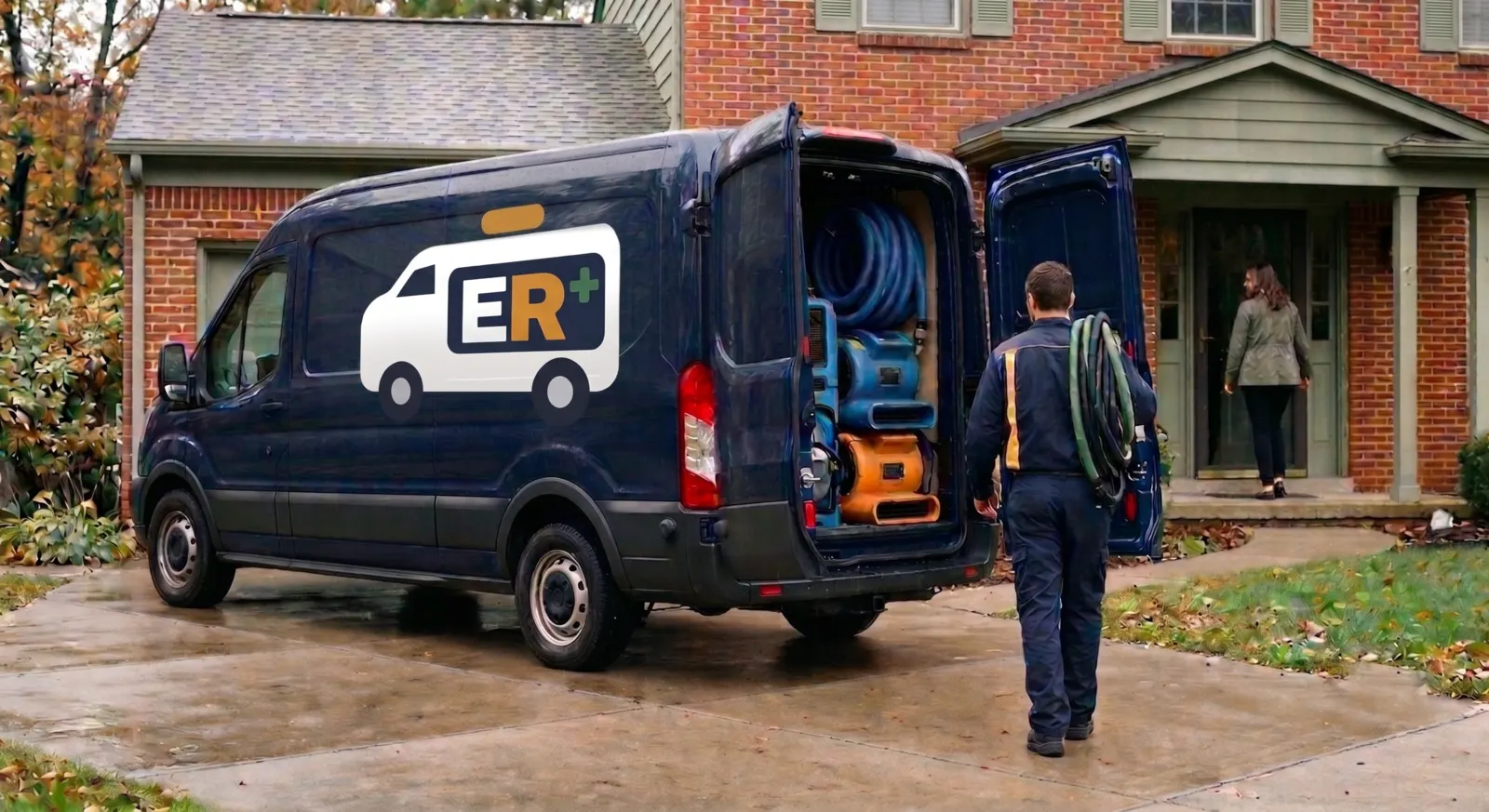
What do Atlanta crews handle?
- Burst & frozen pipes
- Flooded basements & crawl spaces
- Sewage backup & extraction
- Storm & roof-leak flooding
- Ceiling leaks & appliance failures
- Structural drying & dehumidification
Common emergencies in Atlanta
- Severe thunderstorms
- Tornadoes
- Falling trees
- Ice storms
What's different about water damage in Atlanta?
Atlanta's expansive red clay holds water against foundations and crawl spaces - and crawl-space humidity keeps feeding mold long after the original leak is fixed. Severe thunderstorms and winter ice storms drop pines onto roofs across Fulton County, and older in-town neighborhoods still run galvanized supply lines at the end of their life.
Georgia policies treat wind, hail, and fallen trees as standard covered perils - including a neighbor's tree on your roof, which typically falls to your own policy first. Groundwater and crawl-space seepage, though, need flood coverage.
Your call goes to a crew based in the Atlanta area. Serving Atlanta, Decatur, Marietta, Sandy Springs, Smyrna, and all of Fulton County.
Repairing water damage in Atlanta: rules, homes, and who to call
If any part of your house touches a flood zone on FEMA's flood maps, Atlanta requires a permit for every repair, including cosmetic work. Repair costs are counted cumulatively over any 10-year period. If the total reaches 50% of the structure's market value, land excluded, the house is substantially damaged and its lowest floor must be elevated to or above the base flood elevation. Floodproofing is not an alternative for homes. Elevation Certificates generally must be completed by a professional engineer or land surveyor, and owners may appeal a decision by providing additional information. Outside flood zones, the Office of Buildings' exempt-work list covers repairs valued under $10,000 and drywall replacement up to three sheets; ask the Office of Buildings before larger work. For a city main break, call ATL311.
Permits and licensing
Georgia licenses residential and commercial general contractors through the Secretary of State. Specialty trades on the board's list, such as drywall, demolition, painting and shingle roofing, do not need that license, but plumbing, electrical and conditioned-air work still need separate state trade licenses. Inside Atlanta city limits, the Office of Buildings issues a building permit only after the applicant files a notarized Contractor License Affidavit or an exception affidavit; owner-occupants pulling their own permits use the exception form. If any part of a structure touches a FEMA flood zone, the city requires a permit for every repair, even painting, and counts repair costs over any 10-year period toward a 50% substantial-damage threshold. Georgia has no state mold license. Decatur, Sandy Springs and Marietta set their own permit rules.
How Atlanta homes are built
The city's historic-district descriptions show what many older in-town homes look like. In Grant Park, most structures date from the late 1800s to the early 1900s: large two-story mansions face the park, and one-story Victorian-era cottages and Craftsman bungalows predominate on the streets to the east. In Adair Park, frame houses with clapboard exteriors predominate, from three-room gabled-ell cottages to larger temple-front cottages.
When emergencies cluster
Atlanta's water and wind emergencies cluster around spring storms, hard freezes and the tropical season. NWS records an EF2 tornado through downtown on March 14, 2008, and Peachtree, Nancy and Utoy creeks cresting well above flood stage on September 21-22, 2009. Hurricane Helene brought numerous flash floods to metro Atlanta on September 24-27, 2024. In December 2025, prolonged sub-freezing weather caused multiple water pipe failures across the city.
Water and gas: who handles what
Inside city limits, the Department of Watershed Management runs water and sewer. Report a main break, sewer overflow or flooding to ATL311 at 311 inside the city or 404-546-0311; call 911 if flooding is a safety hazard. Atlanta Gas Light runs the gas lines. If you smell gas, leave, warn others, avoid switches, lighters and phones, then call 911 and Atlanta Gas Light at 877-427-4321 once safely away.
Also serving nearby
Common questions
How fast can someone be here?
Our line is answered 24/7, and you're connected with a local restoration crew while you're on the call. The crew confirms timing and sets your arrival time with you directly.
A tree came through my roof - whose insurance pays?
Yours, in most cases - even if it was the neighbor's tree. Your policy covers your structure; anything between insurers happens later, without you in the middle.
Is crawl-space moisture covered?
Gradual seepage generally isn't, but a sudden plumbing failure under the house is. Either way, the moisture has to go before mold takes the crawl space.
Do I need a permit to repair water damage in Atlanta?
It depends on the job and the location. The Office of Buildings' exempt-work list covers repairs valued under $10,000 and drywall replacement up to three sheets. If any part of the house touches a FEMA flood zone, every repair needs a permit, even cosmetic work. In a landmark or historic district, exterior repairs of $2,500 or more can need a permit or certificate of appropriateness.
My house is near Peachtree Creek. What does substantial damage mean in Atlanta?
If repair costs reach 50% of the structure's pre-damage market value, land excluded, the house is substantially damaged and its lowest floor must be elevated to or above the base flood elevation. Atlanta counts repairs cumulatively over any 10-year period, so earlier work adds up. Questions go to the city's Floodplain Administrator at 404-546-3291.
Does Georgia require a license for mold removal?
No. Georgia does not license mold work, and the Department of Public Health says there are no enforceable state or federal mold standards. Ask any company for a written scope, moisture readings and photos, and keep them with your insurance file. Rebuilding still follows Atlanta's permit rules, and plumbing or electrical repairs need state-licensed trades.
Do you work with my insurance?
Many restoration contractors work with adjusters. Ask how billing works on the call, and ask the contractor about documentation and coordination with your adjuster. Sudden, accidental water damage is typically covered by homeowner's insurance. Review your policy, including endorsements.
What does it cost?
It depends on how far the water spread. Ask for a written scope and estimate before work starts. Sudden, accidental water damage is typically covered by homeowner's insurance. Review your policy, including endorsements.
What should I do while I wait?
If it's safe, shut off the water source and power to wet areas, and move valuables up off the floor. The crew handles the rest.