Burst pipe? Do these 5 things in the first 30 minutes.
What you do before the crew arrives decides how much of your floor, drywall, and furniture survives. Here's the field checklist, in order.
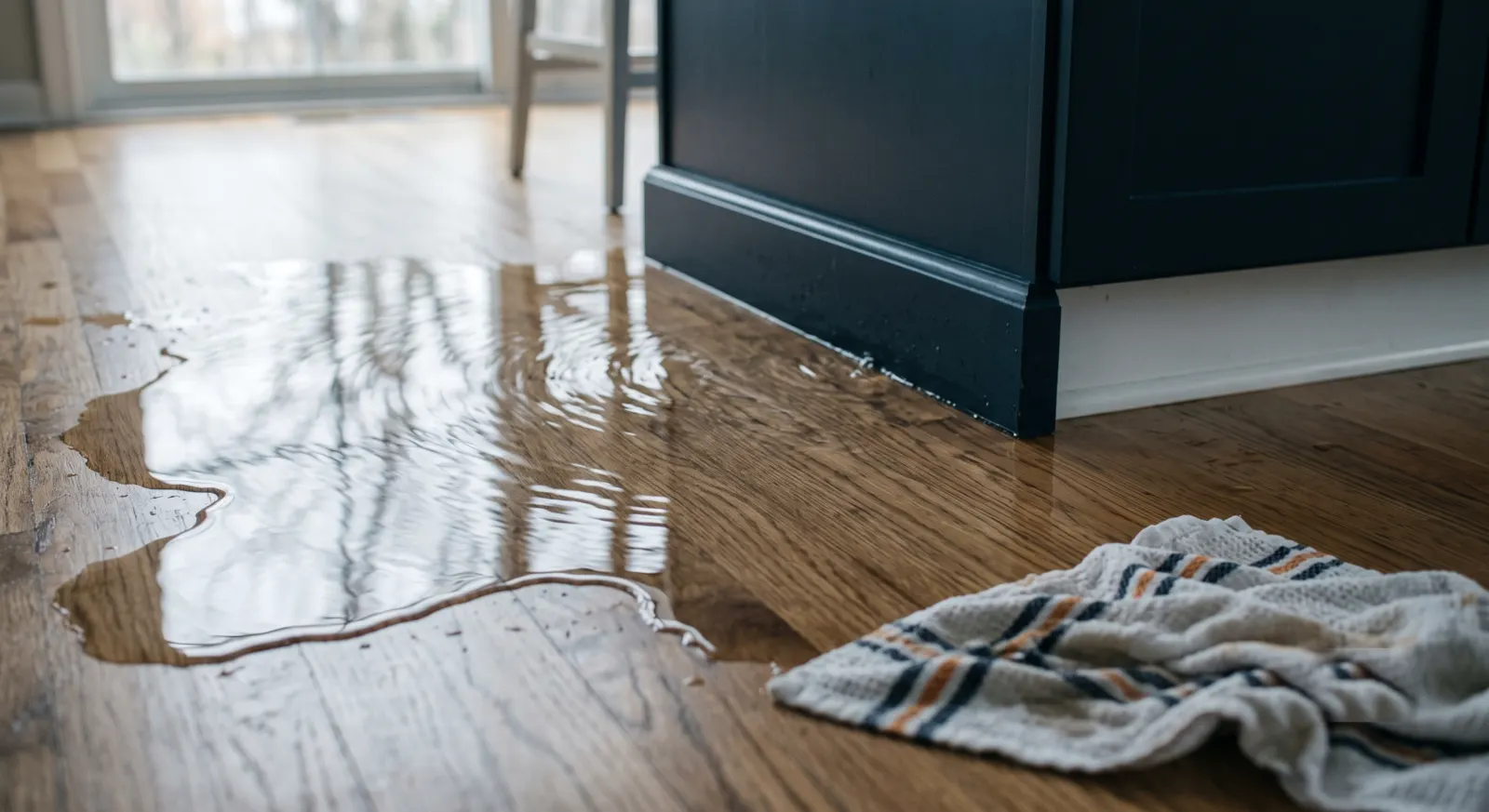
1. Shut off the main water valve
Every minute the main stays open, dozens of gallons keep coming. The valve is usually where the water line enters the house - basement wall, crawl space, garage, or near the water heater. Turn it clockwise until it stops. If you can't find it, shut off the fixture valve nearest the leak and keep moving down this list.
2. Kill power to the wet rooms
Water and live outlets share floors now. At the breaker panel, switch off the circuits for every affected room - don't wade through standing water to reach the panel; if you'd have to, wait for the crew.
4. Move what you can, photograph everything
Get furniture legs onto foil or blocks, pull rugs, lift curtains off the floor. Then photograph and video every wet room before anything else changes - wide shots and close-ups. Your insurance claim is built on this evidence.
5. Don't run the HVAC - and start a simple log
Blowing air through wet ducts spreads moisture (and later, mold spores) through the whole house. Leave it off. Then start a note on your phone: time the pipe burst, time you shut the water, who you called, when. Adjusters love a timeline.
Burst pipe FAQs
Is a burst pipe covered by insurance?
Sudden pipe failures are typically covered, along with the resulting water damage. Repairing the pipe itself, and leaks that developed slowly, are often treated differently. Review your policy, including endorsements. Your photos and timeline from steps 4-5 help show the damage was sudden.
Should I call a plumber or a restoration crew first?
Restoration first if water is standing - extraction is the clock that matters. Most crews coordinate the pipe repair too, so one call usually handles both.
How fast does mold become a risk?
24-48 hours in warm, damp conditions. That's why drying starts the same day, not after the adjuster visits.
Can I just dry it myself with fans?
Household fans dry surfaces, not what's inside walls and under flooring - where the damage actually lives. If more than a few square feet got wet, get it measured with a moisture meter before deciding.