What happens when you call
-
Tell us what happened. 30 seconds - where the water is and how bad.
-
You're connected with a local restoration crew while you're on the line.
-
The crew confirms timing and sets your arrival time with you directly.
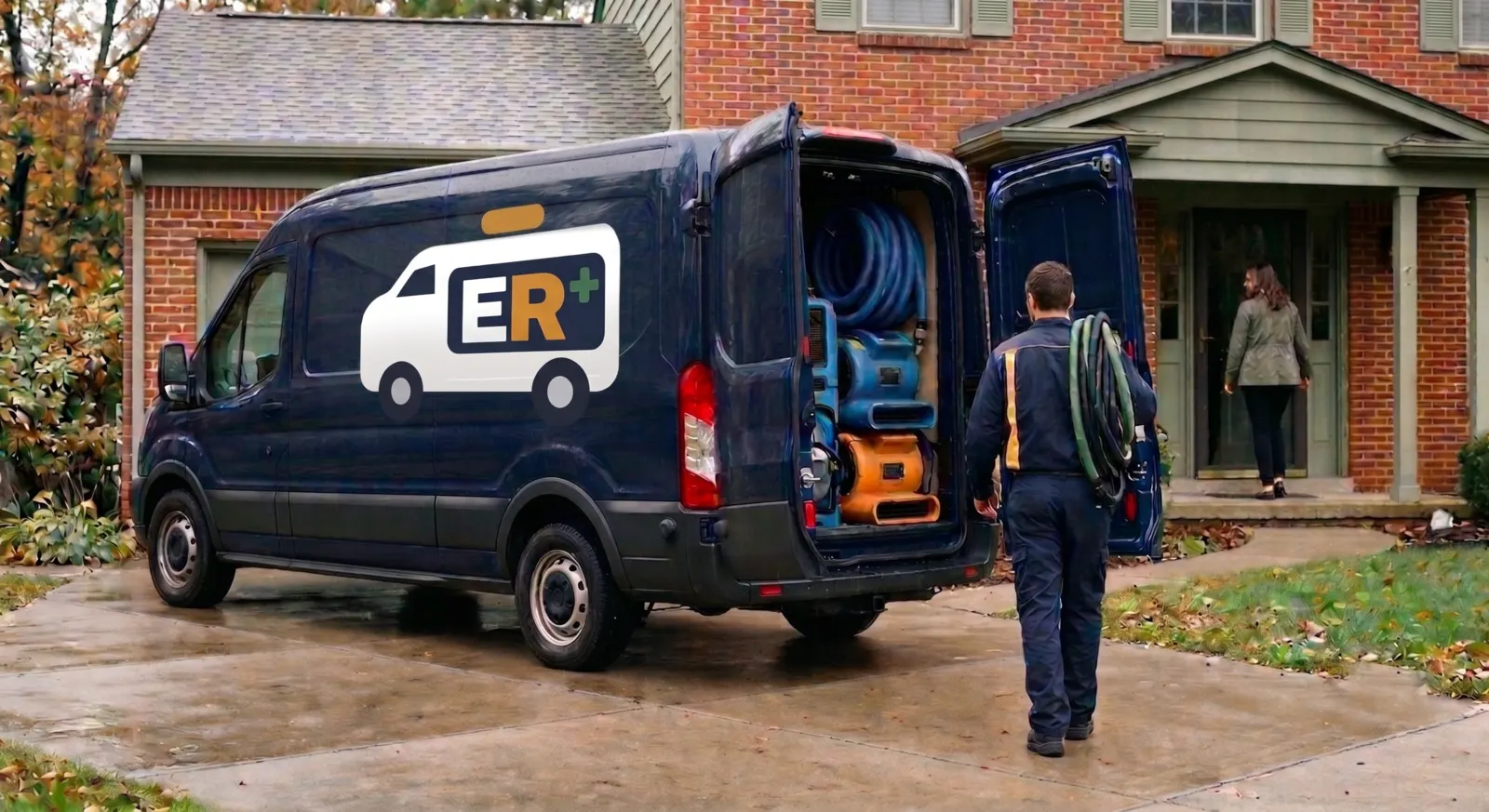
What do Charlotte crews handle?
- Burst & frozen pipes
- Flooded basements & crawl spaces
- Sewage backup & extraction
- Storm & roof-leak flooding
- Ceiling leaks & appliance failures
- Structural drying & dehumidification
Common emergencies in Charlotte
- Hurricane remnants
- Severe thunderstorms
- Ice storms
What's different about water damage in Charlotte?
Charlotte catches hurricanes after landfall - tropical remnants dump inland rain that flash-floods creeks and finds every roof weakness. The metro's red clay drains slowly and holds moisture against crawl spaces, where Carolina humidity keeps mold fed year-round, and the fast-built growth stock adds new slab and attic plumbing to the risk list every year.
North Carolina policies cover storm openings and sudden failures; some carry separate wind/hail or named-storm deductibles even inland, worth checking before hurricane season. Rising water - creek, street, or storm surge remnant - is flood insurance only.
Your call goes to a crew based in the Charlotte area. Serving Charlotte, Concord, Gastonia, Huntersville, Matthews, Rock Hill, and all of Mecklenburg County.
Repairing water damage in Charlotte: rules, homes, and who to call
Charlotte maps two floodplains. The FEMA floodplain shows where flooding is likely now; the Community Floodplain shows where it is likely in the future as upstream land develops. Repairing a flooded home inside them typically takes a Mecklenburg County building permit plus a Floodplain Development Permit. Under UDO Article 27, interior renovations under $10,000 on a home whose lowest floor is below the flood protection elevation can use a general permit; bigger jobs need an individual permit. If repairs cost 10% to 50% of the building's market value, the owner records a notice of floodplain improvements with the Register of Deeds before the building permit. At 50% or more, the lowest floor generally must be raised to the flood protection elevation. Market value excludes land and comes from a North Carolina certified appraiser or the tax value. Floodplain questions go to 704-432-7246.
Permits and licensing
North Carolina requires a general contractor license from the NC Licensing Board for General Contractors for jobs of $40,000 or more. Electrical contracting needs a state electrical license at any job size; plumbing and HVAC contractors are licensed by the State Board of Examiners of Plumbing, Heating and Fire Sprinkler Contractors. Mecklenburg County Code Enforcement handles building permits countywide and may skip them for work of $40,000 or less, except load-bearing repairs or electrical or HVAC replacement. In Charlotte's floodplains, Unified Development Ordinance Article 27 requires a Floodplain Development Permit, and a building is substantially damaged when repairs from damage of any origin over ten years reach 50% of its pre-damage market value. Article 27 covers only the city and its extraterritorial jurisdiction, not Matthews, Huntersville or other towns.
How Charlotte homes are built
Dilworth, Charlotte's first streetcar suburb, was developed between 1891 and 1941, mostly Colonial Revival, Period Revival and bungalow houses, per its National Register nomination. Wesley Heights is an early twentieth century streetcar suburb of bungalows and Colonial and Tudor Revival homes on brick foundations. North Charlotte (NoDa) side-gable mill houses were built on brick piers, now usually filled in. In Myers Park, brick became common in the 1920s.
When emergencies cluster
Wind and flood emergencies cluster in late summer and fall, when tropical systems move inland. Hurricane Hugo crossed Charlotte on September 22, 1989 with gusts near 100 mph. Fay dropped 8.66 inches on Charlotte in late August 2008. Florence put more than 10 inches on south Charlotte gauges in September 2018, and Helene gusted to 57 knots at Charlotte Douglas airport on September 27, 2024.
Water and gas: who handles what
Charlotte Water serves the city: report water leaking from under the street, a meter box or a hydrant to 311 or 704-336-7600; dispatchers answer 24/7. For a leak between the meter and the house, consult a plumber. Your master shut-off is on the house side of the meter. Gas is Piedmont Natural Gas: if you suspect a leak, leave the area, then call 911 or Piedmont at 800.752.7504.
Also serving nearby
Common questions
How fast can someone be here?
Our line is answered 24/7, and you're connected with a local restoration crew while you're on the call. The crew confirms timing and sets your arrival time with you directly.
Hurricane remnants flooded the crawl space - covered?
Rising outside water in a crawl space typically falls under flood insurance, not a homeowner's policy. Rain that came in through storm damage above is typically a homeowner's claim. Mold that follows can be treated differently. Review your policy, including endorsements. Document the water's path.
How fast does crawl-space mold move here?
Carolina humidity keeps crawl spaces damp long after the water's gone - growth can establish in days. Drying the space, not just the house, is the job.
Do I need a permit to repair water damage in Charlotte?
Often yes. Mecklenburg County Code Enforcement may skip permits for work of $40,000 or less, but not for repairing load-bearing structure, changing a plumbing system's design, or replacing heating, cooling or electrical systems. In Charlotte's FEMA or Community floodplain you also need a Floodplain Development Permit, and repairs reaching 50% of the building's market value generally mean raising the lowest floor to the flood protection elevation.
Does a restoration company need a state license in North Carolina?
It depends on the work. A general contractor license is required when the job costs $40,000 or more. Electrical, plumbing and HVAC work each have their own state licensing boards. NCDHHS guidance on hiring mold help names no separate state mold license. Ask for license numbers where the law requires them, and get a written scope, schedule and price before work starts.
Does my hurricane deductible apply when a storm hits Charlotte, far from the coast?
It can. The NC Department of Insurance explains that a named-storm deductible, typically a percentage of your dwelling coverage, typically applies during a window that opens when the National Weather Service issues an advisory, watch or warning for any part of North Carolina and closes 24 hours after the last one ends. Check your declarations page, and remember homeowners policies do not cover flood.
Do you work with my insurance?
Many restoration contractors work with adjusters. Ask how billing works on the call, and ask the contractor about documentation and coordination with your adjuster. Sudden, accidental water damage is typically covered by homeowner's insurance. Review your policy, including endorsements.
What does it cost?
It depends on how far the water spread. Ask for a written scope and estimate before work starts. Sudden, accidental water damage is typically covered by homeowner's insurance. Review your policy, including endorsements.
What should I do while I wait?
If it's safe, shut off the water source and power to wet areas, and move valuables up off the floor. The crew handles the rest.