What happens when you call
-
Tell us what happened. 30 seconds - where the water is and how bad.
-
You're connected with a local restoration crew while you're on the line.
-
The crew confirms timing and sets your arrival time with you directly.
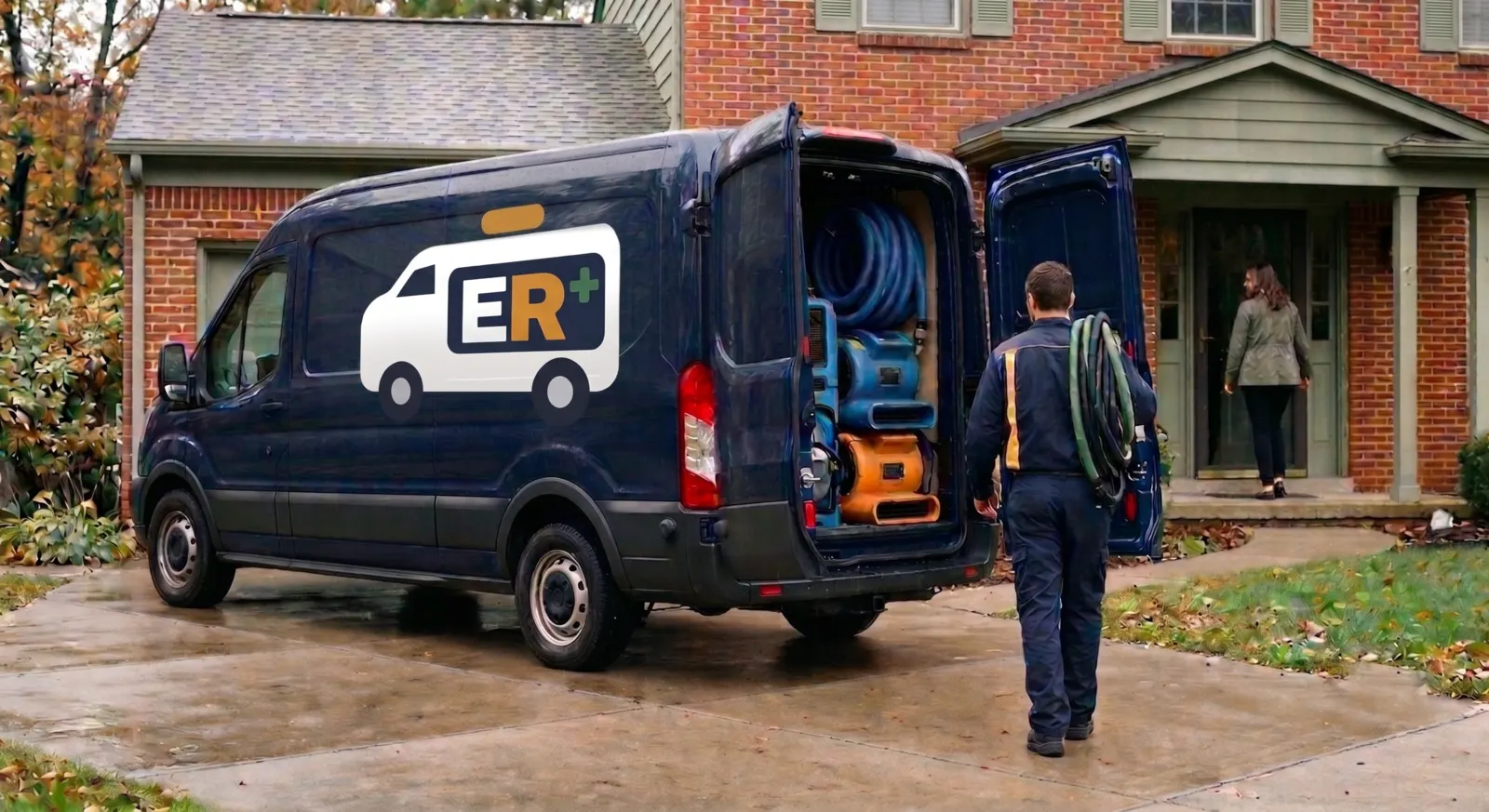
What do Seattle crews handle?
- Burst & frozen pipes
- Flooded basements & crawl spaces
- Sewage backup & extraction
- Storm & roof-leak flooding
- Ceiling leaks & appliance failures
- Structural drying & dehumidification
Common emergencies in Seattle
- Atmospheric-river storms
- Windstorms
- Occasional hard freezes
What's different about water damage in Seattle?
Seattle's damage is patient: months of steady rain keep crawl spaces damp, moss shortens roof life until a winter storm finds the weak spot, and moisture that would evaporate elsewhere lingers here and feeds mold. The Craftsman-era stock runs original galvanized supply lines, and the occasional cold snap bursts pipes in homes built for mild winters.
Washington policies pay for sudden failures - the burst pipe, the failed water heater. What they don't pay for is the slow stuff this climate specializes in: long-term seepage and gradual leaks read as maintenance. When something lets go, documenting that it was sudden is the whole claim.
Your call goes to a crew based in the Seattle area. Serving Seattle, Bellevue, Renton, Kirkland, Redmond, Shoreline, and all of King County.
Repairing water damage in Seattle: rules, homes, and who to call
Seattle Public Utilities answers (206) 386-1800 around the clock for main breaks, sewer backups and water coming in from the street. Your side sewer, the pipe from the house to the public main under the street, belongs to you even past the property line, so SPU advises calling a plumber first and calling SPU if the plumber suspects the main. If an SPU sewer problem caused the backup, you can file a damage claim with the city for reimbursement, so document damage and keep cleanup invoices. Before clearing a side sewer blockage, SPU says to call Puget Sound Energy so a gas line is not damaged. Shut water off at your home valve; older meters without a top shut-off valve can only be operated by SPU crews. Before rebuilding, check whether the lot is in a FEMA floodplain or an SPU-mapped flood-prone area, since Seattle's floodplain rules cover both.
Permits and licensing
Washington requires contractors to register with the Department of Labor & Industries (L&I), with a $30,000 bond for general contractors, $15,000 for specialty contractors, and liability insurance. Plumbing and electrical trades need extra licensing. Inside Seattle, SDCI usually does not require a permit for minor repairs costing $6,000 or less in any six months, valuing labor and parts at market value even for your own work. That exemption may not apply in environmentally critical areas, and load-bearing work or changes to the building envelope need a permit at any size. Nearly all electrical work needs a Seattle electrical permit. In a mapped floodplain, a home is substantially damaged when restoring it would cost 50% or more of its pre-damage market value, triggering floodplain upgrades. Suburbs have their own permit offices.
How Seattle homes are built
On Capitol Hill's west slope, the Harvard-Belmont Landmark District mixes brick and half-timbered mansions from the early 1900s with modest wood-frame houses, plus 1920s apartments along its southern and western edges. Columbia City's landmark district grew in a 1900 to 1907 boom, with storefront buildings along Rainier Avenue South. In both districts, exterior changes need a Certificate of Approval before the city issues permits.
When emergencies cluster
Since 1990, 18 of the 20 federal storm or flood disaster declarations covering King County began between November and January. Recent examples: a winter storm on December 14-15, 2006; storms and flooding from December 1-17, 2007; winter storms and flooding from January 5-29, 2024; and storms, winds and flooding from December 5-19, 2025. King County households qualified for FEMA individual assistance after the 2007 and 2025 events.
Water and gas: who handles what
Inside Seattle, water and sewer are Seattle Public Utilities. Report main breaks, leaks, street flooding and sewer backups to its 24/7 line, (206) 386-1800. Suburbs may have their own water utility; check your bill. Gas is Puget Sound Energy: if you suspect a leak, leave immediately and avoid anything that sparks, like light switches, garage door openers or a landline. From a safe distance, call 911 or PSE at 1-888-225-5773.
Also serving nearby
Common questions
How fast can someone be here?
Our line is answered 24/7, and you're connected with a local restoration crew while you're on the call. The crew confirms timing and sets your arrival time with you directly.
Is slow crawl-space moisture covered?
Gradual seepage typically isn't covered. A sudden plumbing failure under the house typically is, along with the resulting water damage. Mold that follows can be treated differently. Review your policy, including endorsements.
Roof leaked in a winter storm - covered?
Water that enters through a storm-caused opening is typically covered; damage tied to a worn-out roof is often treated as wear and tear. Once it's safe, tarp the opening - most policies require reasonable steps to prevent further damage. Review your policy, including endorsements.
Do I need a permit to repair water damage in Seattle?
It depends on cost and scope. SDCI generally exempts minor repairs costing $6,000 or less in any six months, counting labor and parts at fair market value even if you do the work. The exemption may not apply in an environmentally critical area, and load-bearing work or changes to the building envelope need a permit at any size. Nearly all electrical work needs a Seattle electrical permit.
Sewage backed up into my basement. Is that the city's problem or mine?
Usually it starts with yours. You own the side sewer from the house all the way to the public main, so SPU suggests calling a plumber first. If the plumber suspects the main, call SPU at (206) 386-1800 and it may check the public sewer. If an SPU sewer problem caused the backup, you can file a damage claim with the city; keep photos and cleanup invoices.
Does Washington license mold remediation companies?
No. The Department of Health says there are no specific certification requirements for mold or water damage restoration. What the state does require is L&I contractor registration with a surety bond, $30,000 for general contractors, and liability insurance. Check registration on L&I's site or at 1-800-647-0982. L&I says unregistered contractors carry no bond or insurance to protect consumers.
Do you work with my insurance?
Many restoration contractors work with adjusters. Ask how billing works on the call, and ask the contractor about documentation and coordination with your adjuster. Sudden, accidental water damage is typically covered by homeowner's insurance. Review your policy, including endorsements.
What does it cost?
It depends on how far the water spread. Ask for a written scope and estimate before work starts. Sudden, accidental water damage is typically covered by homeowner's insurance. Review your policy, including endorsements.
What should I do while I wait?
If it's safe, shut off the water source and power to wet areas, and move valuables up off the floor. The crew handles the rest.