What happens when you call
-
Tell us what happened. 30 seconds - where the water is and how bad.
-
You're connected with a local restoration crew while you're on the line.
-
The crew confirms timing and sets your arrival time with you directly.
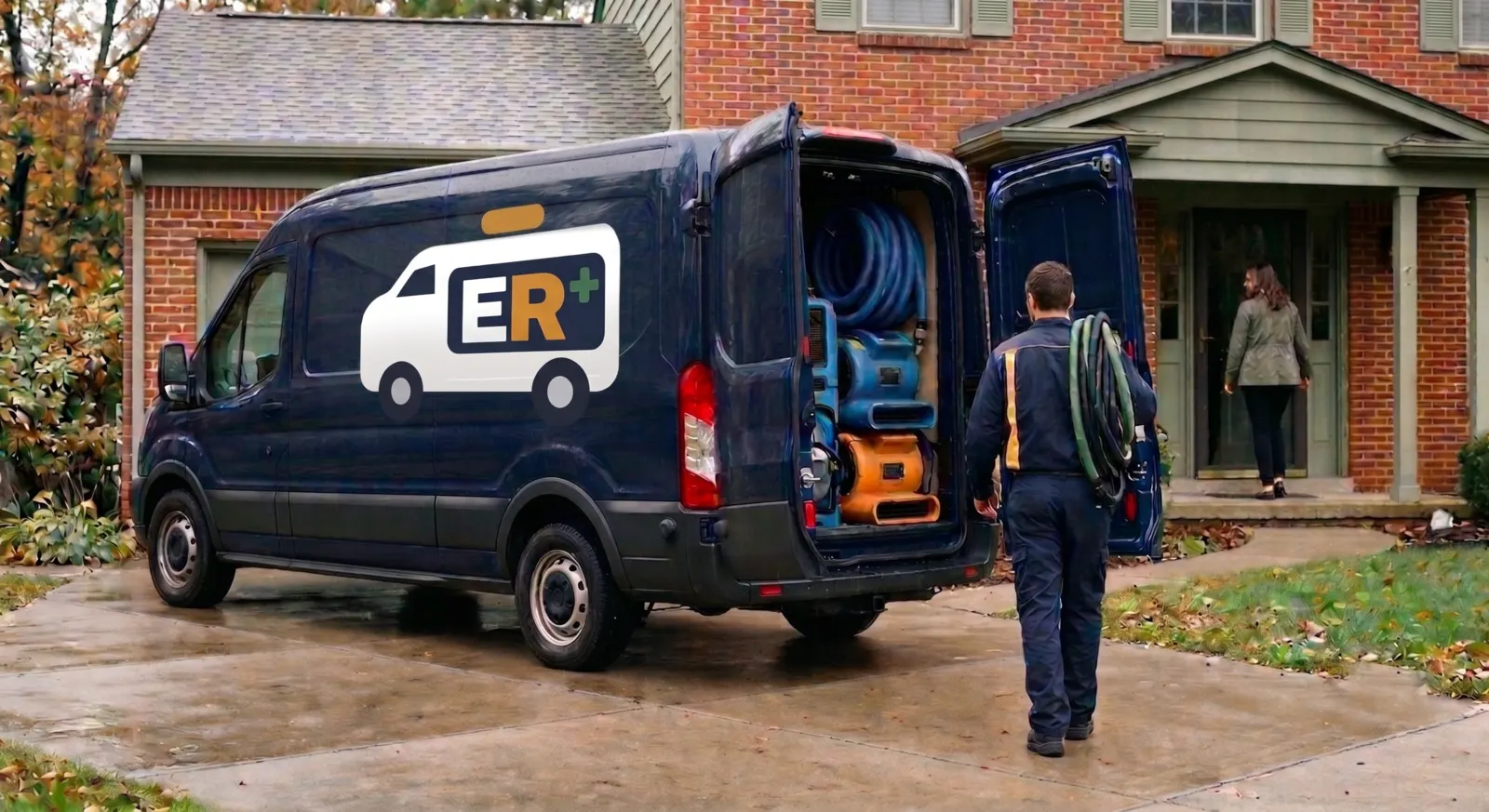
What do New York crews handle?
- Burst & frozen pipes
- Flooded basements & crawl spaces
- Sewage backup & extraction
- Storm & roof-leak flooding
- Ceiling leaks & appliance failures
- Structural drying & dehumidification
Common emergencies in New York
- Nor'easters
- Frozen pipes
- Flash flooding
- Coastal storms
What's different about water damage in New York?
New York's pre-war stock fails in New York ways - aging risers and radiator lines burst inside walls, and the upstairs neighbor's overflow becomes your ceiling collapse. Basement and cellar apartments flood fast when cloudbursts overwhelm the sewers, as Ida proved in 2021, and hard freezes still catch pipes in uninsulated shafts.
In New York, sudden pipe and appliance failures are standard covered losses; water that backs up from sewers or drains needs its own endorsement. In multifamily buildings, whose policy pays - yours, the neighbor's, or the building's - turns on where the failure happened, so documentation matters double.
Your call goes to a crew based in the New York area. Serving New York, Brooklyn, Queens, The Bronx, Staten Island, Yonkers, Hoboken, and all of the five boroughs.
Repairing water damage in New York: rules, homes, and who to call
Check your flood zone first. For building-code purposes, DOB uses the more restrictive of FEMA's effective and preliminary flood maps. In a flood zone, the 50% test adds up all work done in the same period, including minor alterations and ordinary repairs. After a natural disaster, DOB may assess a building and deem it substantially damaged; it mails a notice and posts it where possible. Until DOB decides an appeal, only emergency work is allowed. Appeals are due within 24 months. For a one- or two-family home, a DCWP-licensed home improvement contractor, a Certified Floodplain Manager or a registered design professional must prepare the appeal. If it does not use FEMA's estimator, it needs an itemized cost breakdown and photos of each damaged room. Report a sewer backup to 311 even after the water recedes. The sewer line from your house to the city main is yours to maintain.
Permits and licensing
Inside the five boroughs, a contractor doing construction, repair or remodeling on residential property needs a Home Improvement Contractor license from the city's Department of Consumer and Worker Protection. Plumbing must be done by or under a Department of Buildings licensed master plumber, and electrical work by or under a DOB-licensed master electrician. Most construction needs a DOB permit; painting, plastering and plumbing fixture replacement are among the listed exceptions. In a FEMA flood zone, damage from any cause costing 50% or more of the structure's pre-damage market value, land excluded, is 'substantial damage', and repairs must meet the Building Code's Appendix G flood rules. Hired mold work over 10 square feet requires state-licensed professionals. Yonkers and Hoboken follow their own rules.
How New York homes are built
The Landmarks Preservation Commission's Park Slope historic district report describes blocks of rowhouses, many in brownstone or brick, and low walk-up apartment houses, built mainly between the Civil War and World War I. Certain exterior work on designated buildings needs an LPC permit. After Ida, the city found most damage to one- to four-family homes was in basements and ground floors.
When emergencies cluster
Floods here come from coastal storm surge and from cloudbursts that overwhelm the sewers. Sandy's storm tide reached a record 14.06 feet at the Battery on October 29, 2012. Ida's remnants left a 9.64-inch storm total on Staten Island on September 1, 2021. On July 31, 2025, parts of northern Queens saw 6 to 6.5 inches. NWS preliminarily confirmed blizzard criteria in all five boroughs on February 23, 2026.
Water and gas: who handles what
Water and sewer belong to the Department of Environmental Protection: report a water main break, a street leak or a sewer backup through 311. Gas comes from Con Edison or National Grid, depending on where you live. If you smell gas, leave immediately and take others with you. Don't flip switches, ring doorbells or use your phone. From outside, call 911, Con Edison at 1-800-752-6633 or National Grid at 1-718-643-4050.
Also serving nearby
Common questions
How fast can someone be here?
Our line is answered 24/7, and you're connected with a local restoration crew while you're on the call. The crew confirms timing and sets your arrival time with you directly.
My upstairs neighbor's leak damaged my apartment - whose insurance pays?
Usually your own policy covers your unit's damage first; check your policy for how a neighbor's leak is handled. Photograph the failure point before repairs erase it.
Is basement apartment flooding covered?
It depends on where the water came from. Surface flooding from the street is typically covered by flood insurance. Sewer backup is typically covered only with a sewer or water backup endorsement. Groundwater seepage is generally not covered by either, unless it was caused by a covered flood event. A sudden pipe failure in the building is typically a homeowner's or renter's claim. Review your policy, including endorsements.
Do I need a DOB permit to repair water damage in my New York City home?
Often yes. Most construction needs a Department of Buildings permit, though painting, plastering and plumbing fixture replacement are listed exceptions, and even permit-free plumbing work must be done by a licensed master plumber. In a FEMA flood zone, the 50% substantial-damage test adds up all work done in the same period, including small repairs, so keep every estimate together.
What paperwork should I get after mold remediation in New York?
For a hired project over 10 square feet, keep three documents: the assessor's Mold Remediation Plan, the contractor's work plan, and the assessor's written passed clearance report confirming no visible mold remains and the clearance criteria were met. The contractor may not take down containment until you have that report. Insurers may ask for these; check your policy.
Sewage backed up into my basement during a storm. Can I file a claim with the city?
Report the backup to 311, even after the water is gone, and save the 311 number and any DEP CSR number. If DEP confirms a problem in the city sewer, it starts repairs; if it is in your private line, you get a Notice to Repair. If you believe the city was at fault, contact the NYC Comptroller's Office within 90 days to file a claim.
Do you work with my insurance?
Many restoration contractors work with adjusters. Ask how billing works on the call, and ask the contractor about documentation and coordination with your adjuster. Sudden, accidental water damage is typically covered by homeowner's insurance. Review your policy, including endorsements.
What does it cost?
It depends on how far the water spread. Ask for a written scope and estimate before work starts. Sudden, accidental water damage is typically covered by homeowner's insurance. Review your policy, including endorsements.
What should I do while I wait?
If it's safe, shut off the water source and power to wet areas, and move valuables up off the floor. The crew handles the rest.