What water damage restoration costs in 2026 - and what drives the number
National ranges by water category, the four factors that move your number - and why the category of water matters more than the square footage.
The short answer: typical ranges
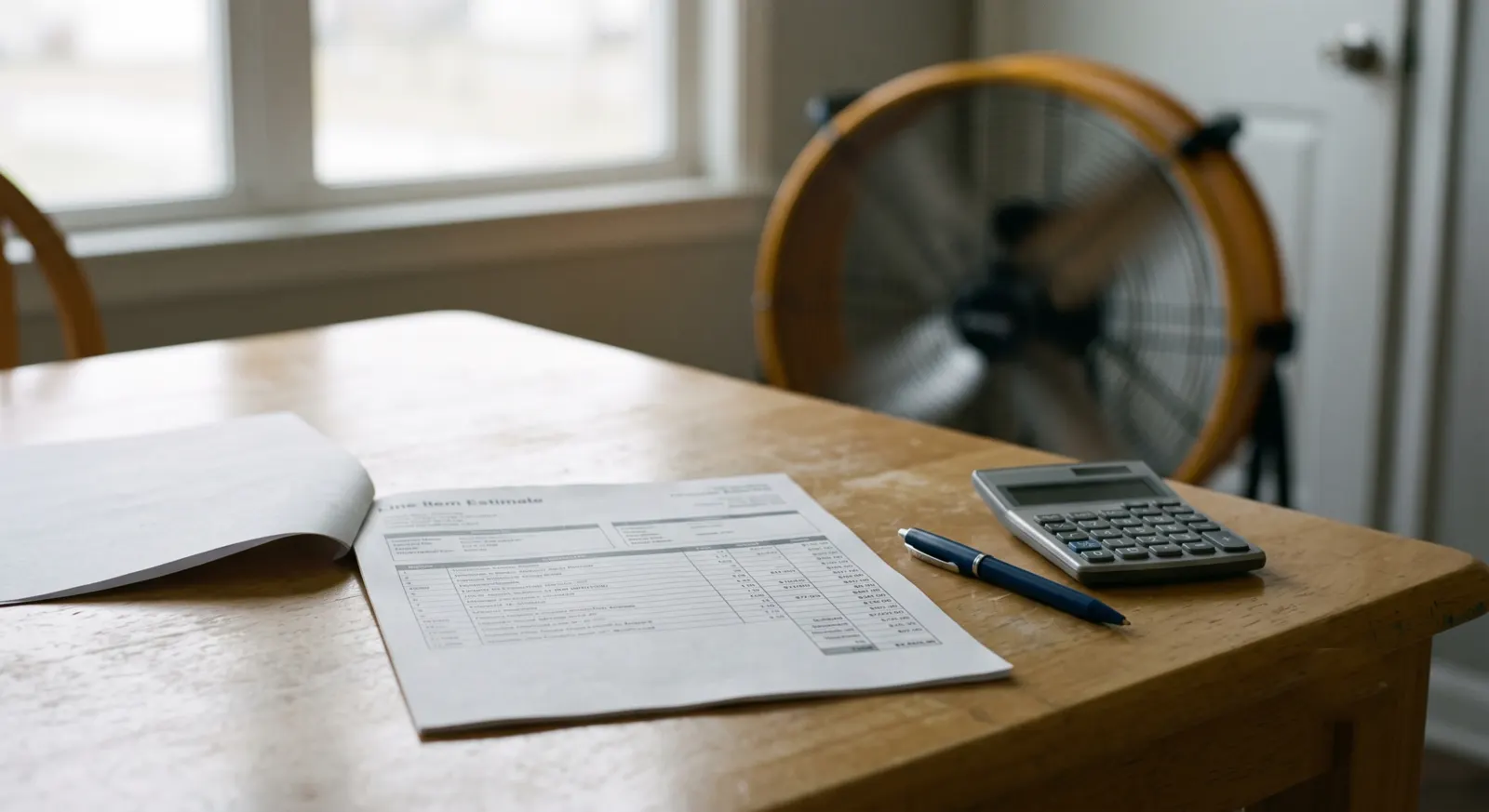
These are the ranges homeowners commonly see nationally. Your number depends on your house, your water, and your market - the written scope after inspection is the only estimate that actually counts.
- ✓ Small clean-water cleanup, caught fast (one room): roughly $400-$2,000
- ✓ Typical residential loss - extraction, drying, some drywall: roughly $1,500-$6,000
- ✓ Gray water (washer, dishwasher, water heater): roughly $3,000-$7,500
- ✓ Sewage or long-standing water: often $7,000-$25,000+
- ✓ Whole flooded basement with rebuild: $10,000-$50,000+
The category of water is the biggest multiplier
Crews grade water in three categories, and cost tracks the grade more than the gallons. Clean water - a supply line, a burst pipe - can usually be extracted and dried in place. Gray water - appliance discharge - needs cleaning and disinfection on top of drying. Black water - sewage or water that's stood for days - means everything porous it touched gets removed, bagged, and disposed of, in protective gear, by rule. Same room, triple the line items.
The other three factors that move your number
Time. Water keeps traveling until it's stopped - through drywall, under flooring, into framing. The difference between a two-hour response and a weekend away is often the difference between drying materials and replacing them. Past 24-48 damp hours, mold starts adding its own line to the scope.
What got wet. Drywall is cheap to cut and replace. Hardwood, cabinetry, and subfloor aren't - that's why a ceiling leak over a kitchen costs multiples of the same water over a garage.
Mitigation vs. rebuild. The emergency work - extraction, removal, drying - is one phase. Putting the room back (drywall, paint, flooring) is a second one, often quoted and billed separately. When a big number scares you, check which phases it includes.
How to keep the number down
Call fast - hours are the most expensive thing on this list. Don't touch black water yourself; the protective gear and disposal rules exist for reasons. Photograph everything before anything is moved - the claim checklist covers what adjusters actually want to see. And get every scope in writing before work starts, including who bills the insurer.
What insurance typically picks up
For covered sudden losses, both phases - mitigation and rebuild - are typically paid minus your deductible, including equipment days. Flood needs its own policy, sewer backup its own endorsement, and gradual leaks are where claims die. The plain-English coverage guide has the details.
Cost questions
Why do estimates vary so much between companies?
Usually because they're pricing different jobs - one bid dries the walls, another replaces them. A written scope that lists what's being dried, removed, and rebuilt is the only way to compare bids honestly.
Does insurance cover these costs?
Sudden losses - burst pipes, appliance failures - are usually covered minus your deductible, including the drying equipment and rebuild. Flood and sewer backup have their own rules. The coverage guide walks through it.
Can I just rent fans and skip the bill?
For a small clean-water spill caught immediately - maybe. Rented fans dry surfaces; they don't dry wall cavities or subfloor, and they don't produce the moisture readings your insurer wants. Sealed-in dampness costs more than the crew would have.
What should a written scope include?
What gets extracted, what gets dried in place, what gets removed and replaced, the equipment and days involved, and who's billing the insurer. If a number arrives without that list, it's a guess.