Flooded basement: what's salvageable and what isn't
Two things decide what survives a flooded basement: what kind of water came in, and how fast drying starts. Here's how crews triage it - so you throw out less and fight your insurer less.
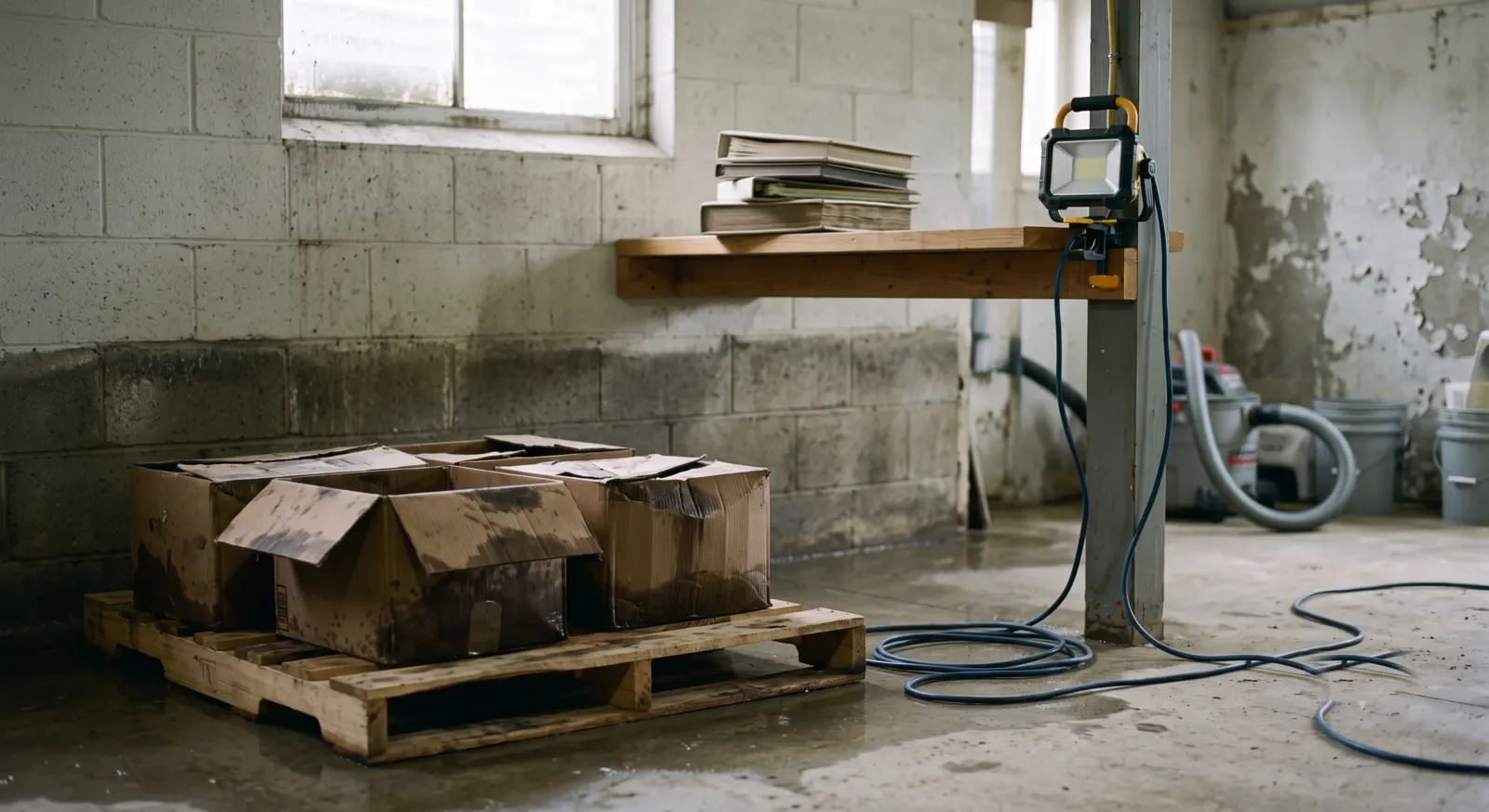
First question: what kind of water?
Crews grade water in three categories. Clean - a burst supply line. Gray - washing machine or dishwasher discharge. Black - sewage backup or groundwater flooding, which carries contamination. The category decides almost everything below: things a clean-water flood spares, a black-water flood condemns.
Usually salvageable
- ✓ Solid-wood and metal furniture - cleaned, dried, refinished if needed
- ✓ Concrete, tile, and sealed masonry - extraction plus antimicrobial treatment
- ✓ Framing and studs - if structural drying starts within a day or two
- ✓ Carpet in clean water - extracted and dried fast, pad usually replaced
Usually a loss
Carpet and pad touched by gray or black water. Particleboard and MDF furniture - it swells once and never comes back. Drywall and insulation soaked below the waterline (crews cut it out to a clean line above the mark - the "flood cut" you've seen in photos). Mattresses and upholstery in anything but clean water. When in doubt, the rule is blunt: porous + contaminated = out.
The 48-hour rule
Mold needs about 24-48 damp hours to establish. Anything dried inside that window has a real chance; past it, "salvageable" starts shrinking fast and remediation costs stack on top of restoration. It's also why insurers expect prompt mitigation - waiting can hurt the claim itself (more on that in our coverage guide).
Flooded basement FAQs
Should I pump the water out myself?
If it's a few inches of clean water and the power to the basement is off - you can start. But drain a deeply flooded basement slowly; groundwater pressing on the walls can crack the foundation if you empty it too fast. That judgment call is exactly what crews are for.
Is basement flooding covered by insurance?
A burst pipe is typically covered by a homeowner's policy. Surface flooding is typically covered by flood insurance. Sewer backup is typically covered only with a sewer or water backup endorsement. Groundwater seepage is generally not covered by either, unless it was caused by a covered flood event. Review your policy, including endorsements. The plain-English coverage guide walks through each case.
What about the furnace and water heater?
Don't relight or power anything that took water - have them inspected first. Submerged gas valves and controls are typically replaced, not dried.
Can I just run a dehumidifier for a week?
A household unit can't keep pace with a saturated basement - walls and slab hold gallons you can't see. Crews verify with moisture meters; "feels dry" is how basements end up moldy in September.