How long does it take a house to dry out?
Three to five days for most rooms, with professional equipment running around the clock. Here's what moves that number - and what "dry" actually means.
The honest answer: 3-5 days, usually
That's a typical room with drywall and wood framing, extraction done promptly, and equipment monitored daily. Three things move the number: what got wet (concrete and hardwood hold water far longer than drywall), how saturated it got (an hour of standing water vs. a weekend), and the weather - drying into humid summer air takes longer than drying in January.
What "dry" actually means
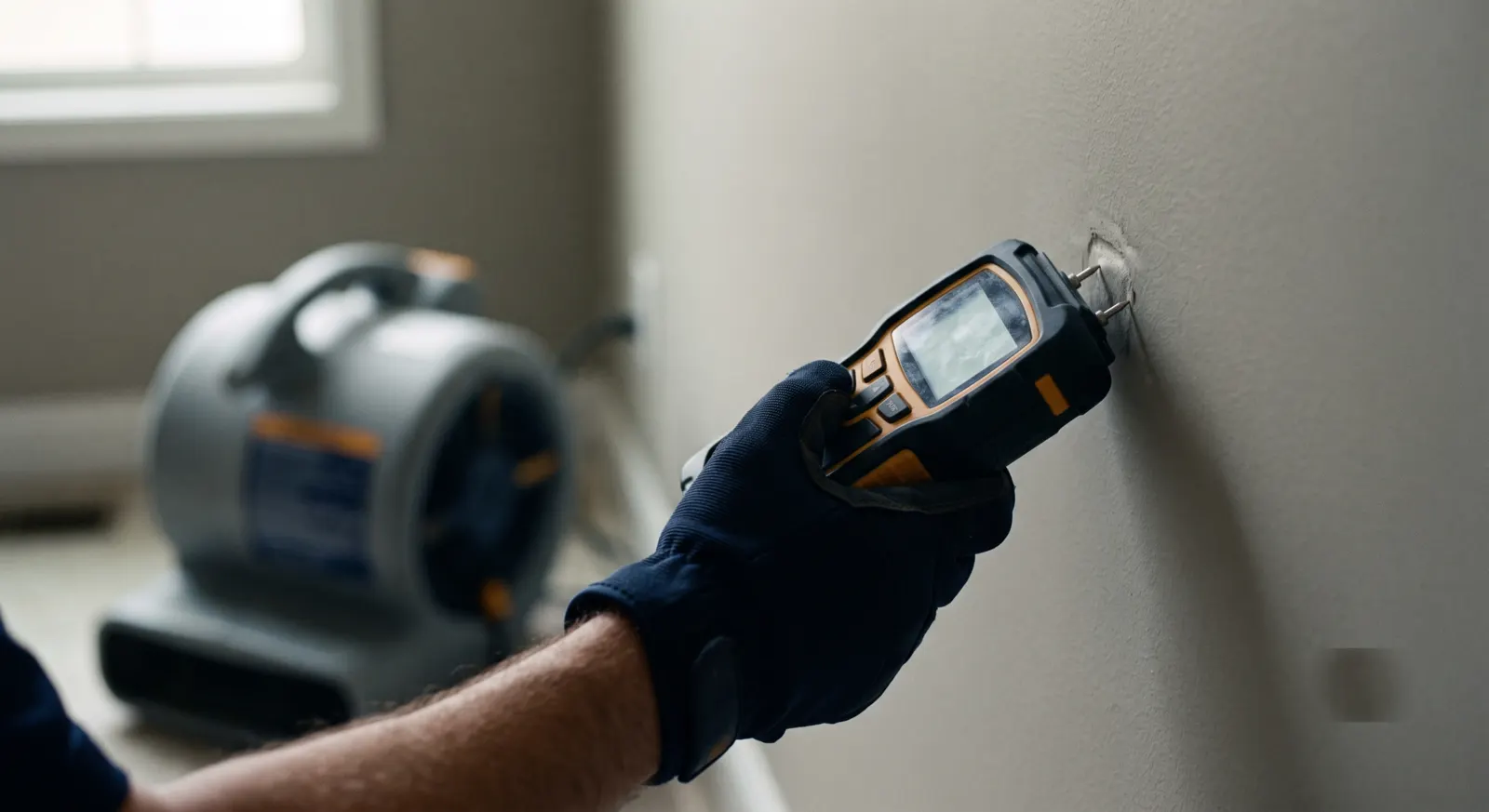
Not "feels dry." A surface can feel fine while the wall cavity behind it reads soaked. Crews call it dry when moisture-meter readings in the affected materials match the unaffected parts of the same house - your home's own baseline. That's also the number your insurer wants documented.
What the days look like
Day 1: extraction, moisture mapping, equipment placed - air movers pushing air across wet surfaces, dehumidifiers pulling the moisture out of it. Days 2-4: the loud part. Equipment runs continuously; the crew checks readings daily and repositions as materials dry unevenly. Final day: readings hit baseline, equipment comes out, and anything that needs rebuild (cut drywall, flooring) gets scheduled.
Why you can't rush the finish
The temptation on day 3 is to paint, re-carpet, and be done. Sealing damp materials behind new finishes is how houses end up with mold inside the walls and a claim dispute six months later. The extra day of readings is the cheapest insurance in this whole process - more on that in the coverage guide.
Drying FAQs
Can I turn the fans off at night?
Please don't - drying is cumulative, and every hour off lets moisture migrate back. Crews position equipment to be as bearable as possible; ask them to adjust before you unplug.
Does insurance pay for the drying days?
Yes - equipment, monitoring, and the electricity are standard parts of a covered mitigation. The daily readings are the paper trail.
It still smells musty after drying - normal?
No. A lingering musty smell means moisture somewhere the meters didn't reach - or mold that beat the equipment. Call the crew back; reputable ones return on their own work.
Hardwood floors - save or replace?
Often savable with specialty drying mats if started fast - cupped boards can flatten as they dry. Weeks-wet or buckled floors are usually replaced.