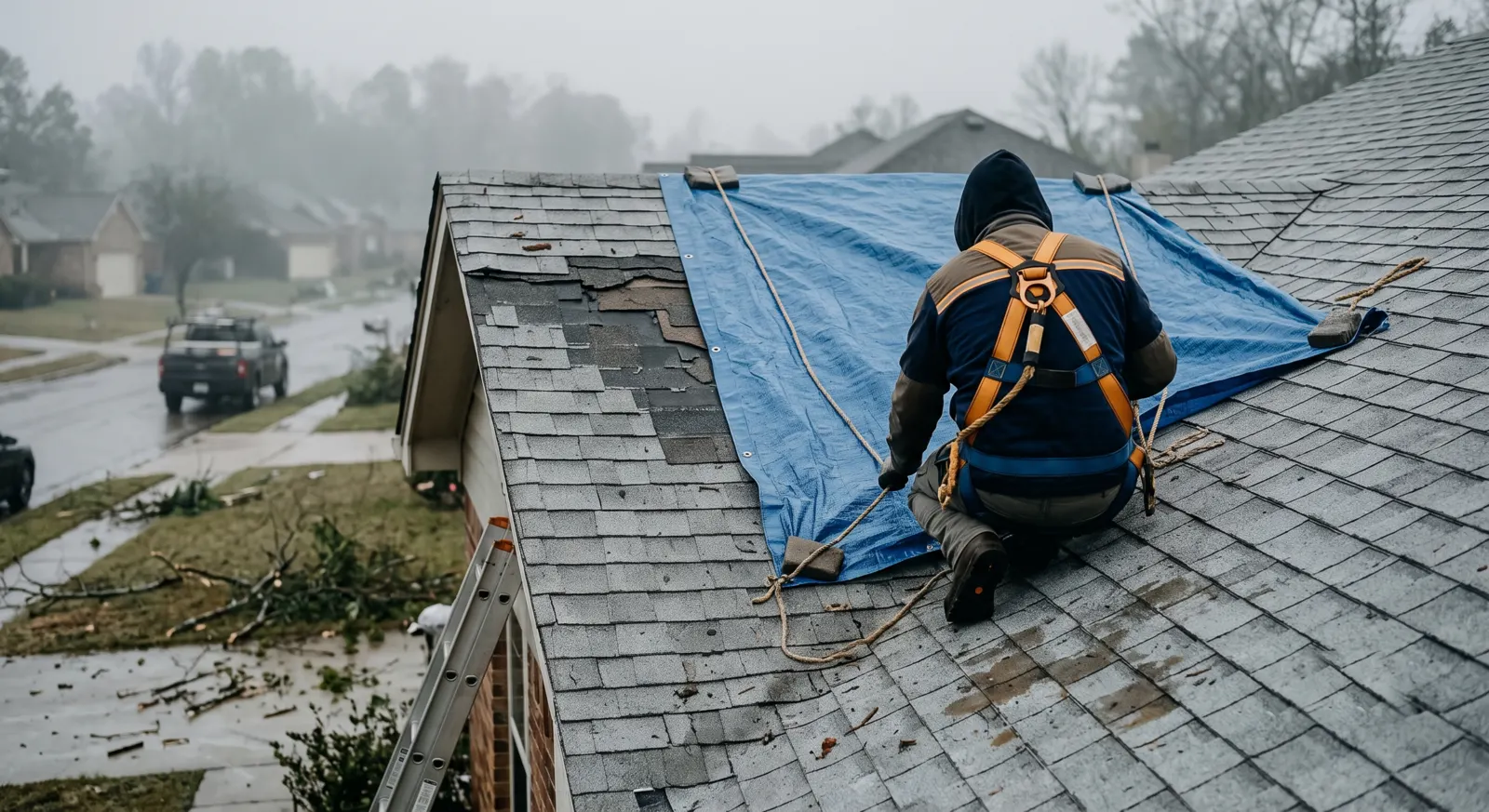
Signs you need a crew now
- Missing shingles, or daylight visible in the attic
- A broken window, door, or hole the rain can reach
- Water running down interior walls or pooling in the attic
- A tree or limb on the roof - stay out of that room
What happens when you call
-
Tell us what happened. 30 seconds - what's open to the sky and what's wet.
-
You're connected with a local restoration crew while you're on the line.
-
The crew confirms timing and your arrival time - tarping and board-up come first.
Why this one can't wait
An opening in the roof turns every following shower into a new loss - and your policy expects "reasonable mitigation," which means tarping and boarding fast, not waiting for the adjuster.
The crew secures the openings, photographs everything for the claim, extracts what already got in, and dries the structure before mold takes the storm's side.
Local to the five boroughs
New York's pre-war stock fails in New York ways - aging risers and radiator lines burst inside walls, and the upstairs neighbor's overflow becomes your ceiling collapse. Basement and cellar apartments flood fast when cloudbursts overwhelm the sewers, as Ida proved in 2021, and hard freezes still catch pipes in uninsulated shafts.
In New York, sudden pipe and appliance failures are standard covered losses; water that backs up from sewers or drains needs its own endorsement. In multifamily buildings, whose policy pays - yours, the neighbor's, or the building's - turns on where the failure happened, so documentation matters double.
Serving New York, Brooklyn, Queens, The Bronx, Staten Island, Yonkers, Hoboken, and all of the five boroughs.
Storm damage questions
Is storm damage covered by insurance?
Wind and hail damage - including the rain that enters through it - is standard homeowner's coverage. Rising water from outside is flood insurance, a separate policy. See the coverage guide.
Should I wait for the adjuster before touching anything?
Generally, no. Most policies require reasonable steps to prevent further damage. Photograph everything first, then, once it's safe, tarp and start drying. Keep receipts and records of what was done before the adjuster's visit.
Can I tarp the roof myself?
Not in the wet or the dark, and not after a storm has loosened things underfoot. Crews carry the gear and the fall protection - it's included in the mitigation the policy pays for.
My upstairs neighbor's leak damaged my apartment - whose insurance pays?
Usually your own policy covers your unit's damage first; check your policy for how a neighbor's leak is handled. Photograph the failure point before repairs erase it.