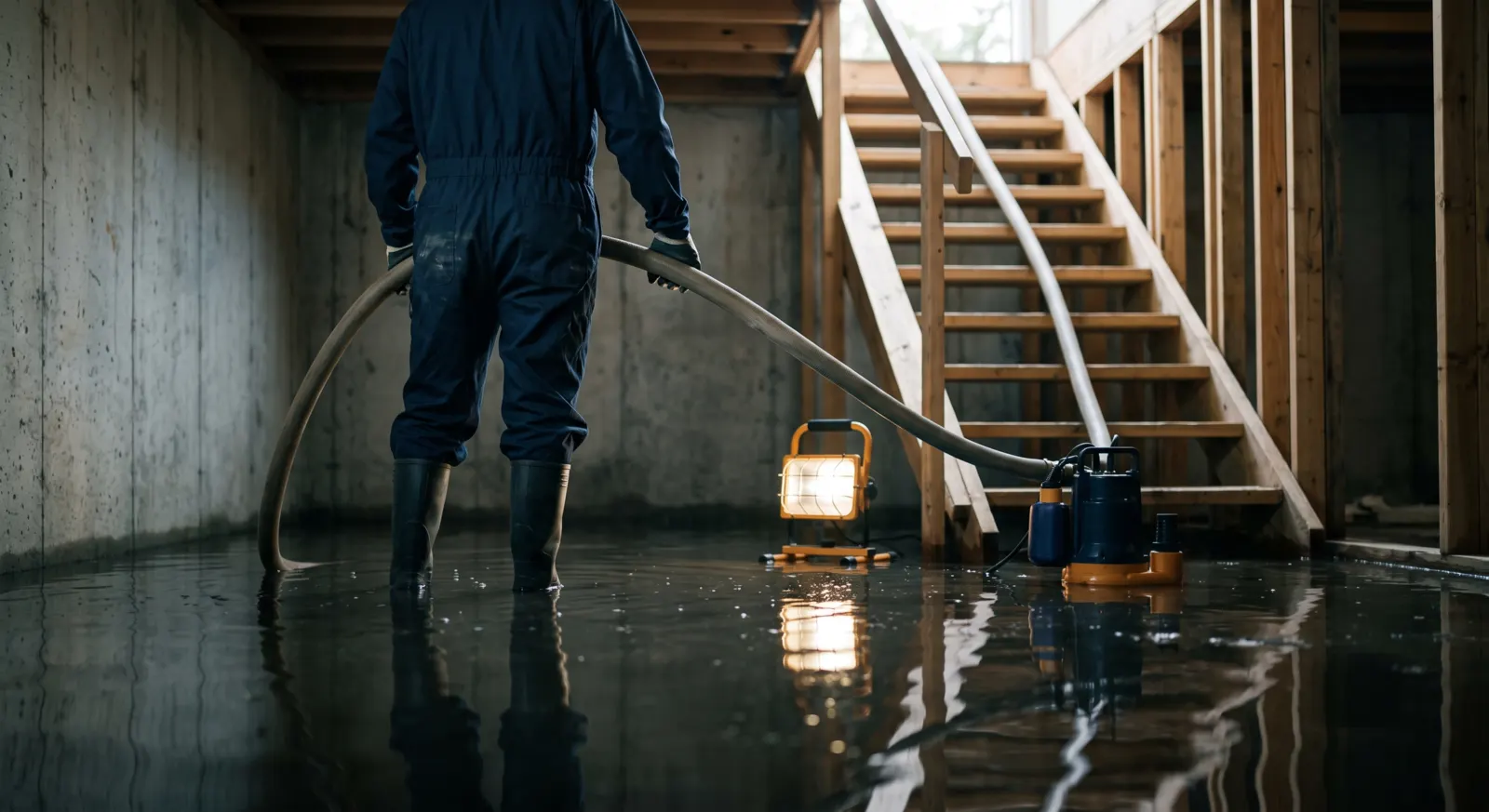
Signs you need a crew now
- More than an inch of standing water - anywhere
- Water rising through the floor drain or wall cracks
- Sump pump dead, tripped, or can't keep up
- A sewage smell - that's contaminated water, don't touch it
What happens when you call
-
Tell us what happened. 30 seconds - how deep, and where it's coming from.
-
You're connected with a local restoration crew while you're on the line.
-
The crew confirms timing and sets your arrival time with you directly.
Why this one can't wait
Basement walls and slab soak up gallons you can't see, and mold gets established in 24-48 damp hours. Every hour underwater moves more of your stuff from "salvageable" to "loss."
And a deeply flooded basement has to be drained slowly - empty it too fast and groundwater pressure can crack the foundation. That judgment call is the crew's job, not yours. More detail in the salvage guide.
Local to the District
DC rowhouses put finished living space below grade, and the city's older combined sewers back up into those basements when summer downpours hit. English basements flood street-first, flat roofs pond, and the region's swampy humidity means anything left damp grows mold quickly - especially behind plaster walls that dry slowly.
District policies cover sudden pipe and appliance failures; water backing up from sewers or drains - the classic DC basement loss - needs its own endorsement. Rising street water is flood insurance, a separate policy, even when it only reaches the areaway door.
Serving Washington, Arlington, Alexandria, Bethesda, Silver Spring, Hyattsville, and all of the District.
Flooded basement questions
Can't I just pump it out myself?
A few inches of clean water with the power off - maybe. Deep water needs a slow, staged drain-down so the foundation isn't damaged, plus extraction from the slab and walls a shop vac can't touch.
Is basement flooding covered by insurance?
A burst pipe is typically covered by a homeowner's policy. Surface flooding is typically covered by flood insurance. Sewer backup is typically covered only with a sewer or water backup endorsement. Groundwater seepage is generally not covered by either, unless it was caused by a covered flood event. Review your policy, including endorsements. See the coverage guide.
What about the furnace and water heater?
Don't relight or power anything that took water - the crew has them inspected. Submerged gas valves and controls are typically replaced, not dried.
My English basement flooded in a storm - is that covered?
It depends on the path: sewer backup needs a backup endorsement, street water needs flood insurance, and a burst pipe is standard coverage. Photos of where the water came in help show which one happened.