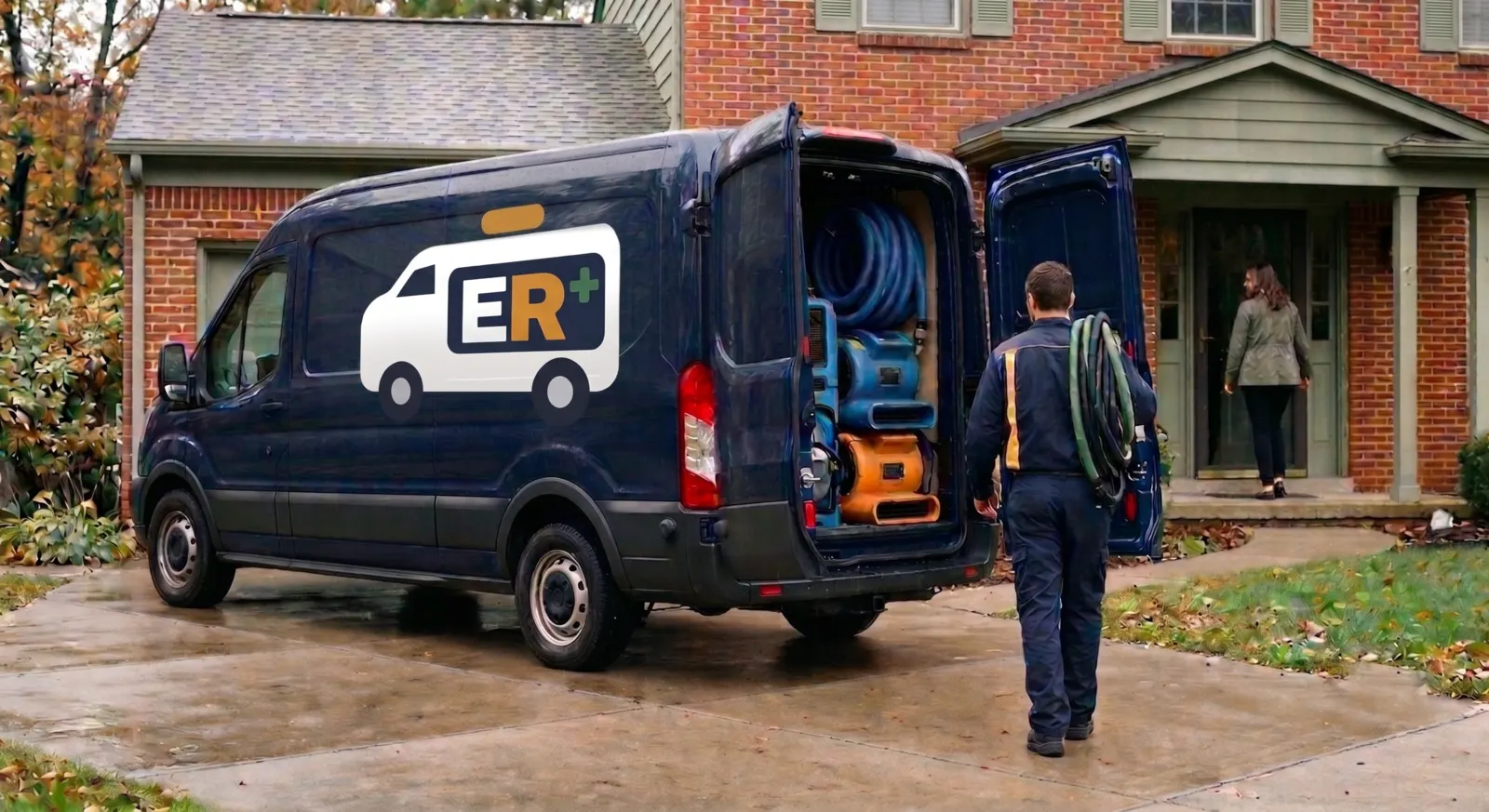
What happens when you call
-
Tell us what you're seeing. 30 seconds - where it is and how far it's spread.
-
You're connected with a local mold remediation crew while you're on the line.
-
The crew confirms your inspection appointment and sets the time with you directly.
What St. Louis crews handle
What's different in St. Louis?
St. Louis takes water from every direction - river flooding on the big years, flash-flooding downpours in between, and a brick housing stock whose century-old supply lines fail on their own schedule. Humid summers grow mold fast in wet basements, and spring severe-weather season adds roof and tornado damage to the mix.
Missouri policies cover sudden failures and storm openings; river or street water needs flood insurance, and sewer backup - common when downpours overwhelm older lines - needs its own endorsement. Wind and hail are standard perils, sometimes with their own deductible.
Your call goes to a crew based in the St. Louis area. Serving St. Louis, Clayton, Florissant, Chesterfield, Kirkwood, St. Charles, and all of St. Louis City & County.
What to know before repairs in St. Louis
Missouri's Division of Professional Registration lists no license for mold inspectors or remediators. The state health department says mold testing is not a regulated industry, that neither Missouri nor the federal government certifies mold testers, and that testing is not standardized. It also says sampling is usually unnecessary when mold is visible. Because no state certificate or required report comes with a mold job here, ask for a written scope, photos of the work, and a note on whether the moisture source was fixed, and keep them with your insurance file. Renters should read the Missouri landlord-tenant law and send complaints to the landlord in writing, keeping a copy. Complaints about deceptive or unfair sales practices go to the Missouri Attorney General's Consumer Protection hotline at 800-392-8222. Health questions go to the state health department at 866-628-9891.
Common questions
Should I test first or go straight to removal?
If mold is visible and the moisture source is obvious, go straight to remediation. Test first when mold is hidden, symptoms don't match what you can see, or you need documentation for a claim.
Is mold really that dangerous?
It's a health concern worth taking seriously - especially for kids, older adults, and anyone with asthma or allergies. Removal ends the exposure either way.
Is mold remediation covered by insurance?
Mold remediation may be covered when the mold resulted from a covered sudden water loss, often up to a separate limit. Coverage depends on the cause and your policy's mold exclusions, endorsements and limits. A covered water loss does not automatically establish coverage for mold remediation. Check your declarations page for any mold limit.