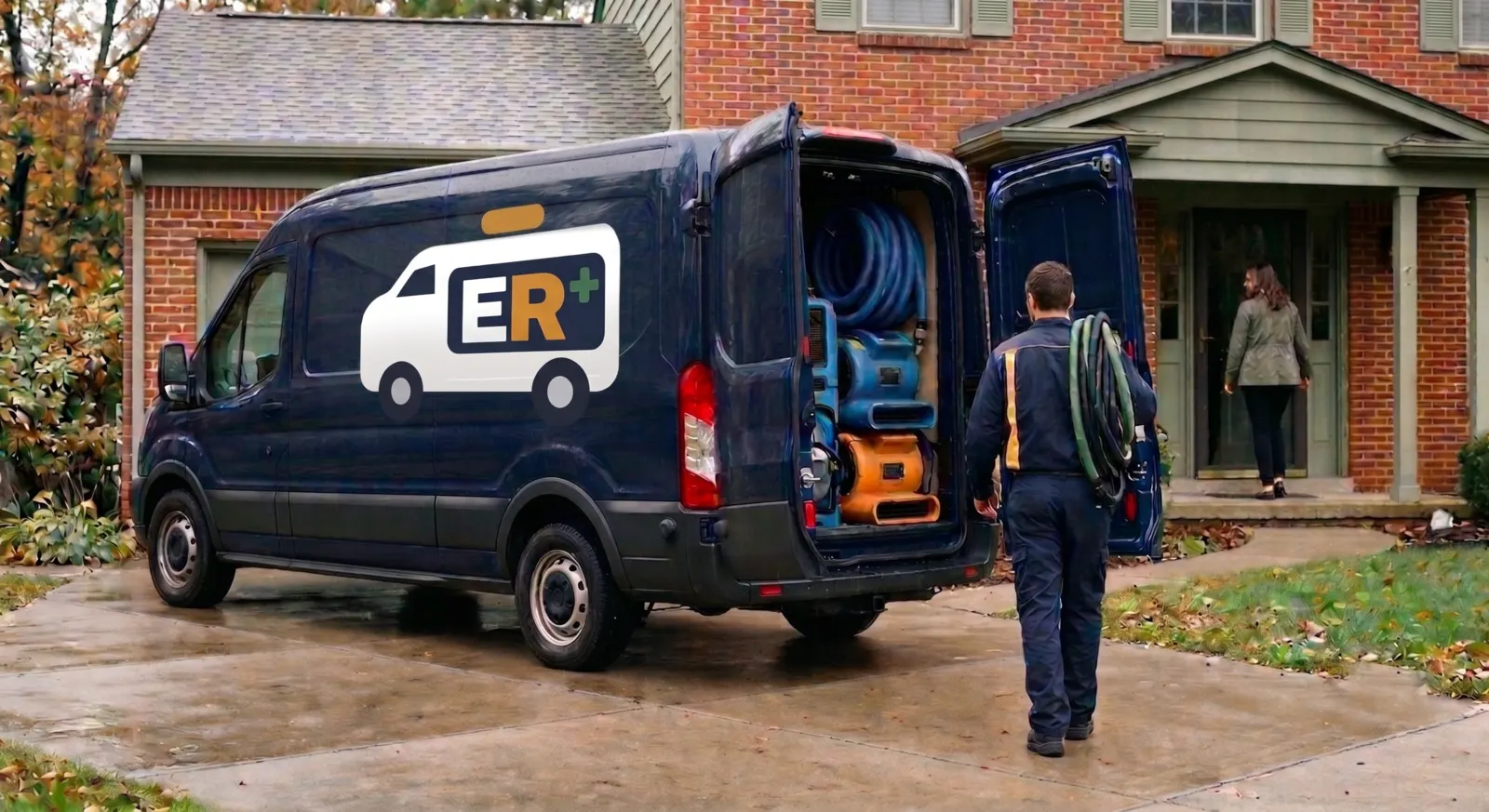
What happens when you call
-
Tell us what you're seeing. 30 seconds - where it is and how far it's spread.
-
You're connected with a local mold remediation crew while you're on the line.
-
The crew confirms your inspection appointment and sets the time with you directly.
What New York crews handle
What's different in New York?
New York's pre-war stock fails in New York ways - aging risers and radiator lines burst inside walls, and the upstairs neighbor's overflow becomes your ceiling collapse. Basement and cellar apartments flood fast when cloudbursts overwhelm the sewers, as Ida proved in 2021, and hard freezes still catch pipes in uninsulated shafts.
In New York, sudden pipe and appliance failures are standard covered losses; water that backs up from sewers or drains needs its own endorsement. In multifamily buildings, whose policy pays - yours, the neighbor's, or the building's - turns on where the failure happened, so documentation matters double.
Your call goes to a crew based in the New York area. Serving New York, Brooklyn, Queens, The Bronx, Staten Island, Yonkers, Hoboken, and all of the five boroughs.
What to know before repairs in New York
New York does not require you to clean up mold. If you hire someone for an area over 10 square feet, state law requires a licensed Mold Assessor first, then a licensed Mold Remediation Contractor; no licensee may do both on the same project. You are entitled to the assessor's Mold Remediation Plan before work begins, covering moisture sources, methods, clearance criteria and a cost estimate, and to the contractor's work plan before cleanup starts. The job is complete when the assessor issues a written passed clearance report; if it fails, you get a final status report. Homeowners working on their own property are exempt. In buildings with 10 or more apartments, licensed mold workers must also file paperwork with the city's DEP for jobs over 10 square feet. Check licenses with the Department of Labor's search tool and file complaints through its mold complaint form.
Common questions
Should I test first or go straight to removal?
If mold is visible and the moisture source is obvious, go straight to remediation. Test first when mold is hidden, symptoms don't match what you can see, or you need documentation for a claim.
Is mold really that dangerous?
It's a health concern worth taking seriously - especially for kids, older adults, and anyone with asthma or allergies. Removal ends the exposure either way.
Is mold remediation covered by insurance?
Mold remediation may be covered when the mold resulted from a covered sudden water loss, often up to a separate limit. Coverage depends on the cause and your policy's mold exclusions, endorsements and limits. A covered water loss does not automatically establish coverage for mold remediation. Check your declarations page for any mold limit.