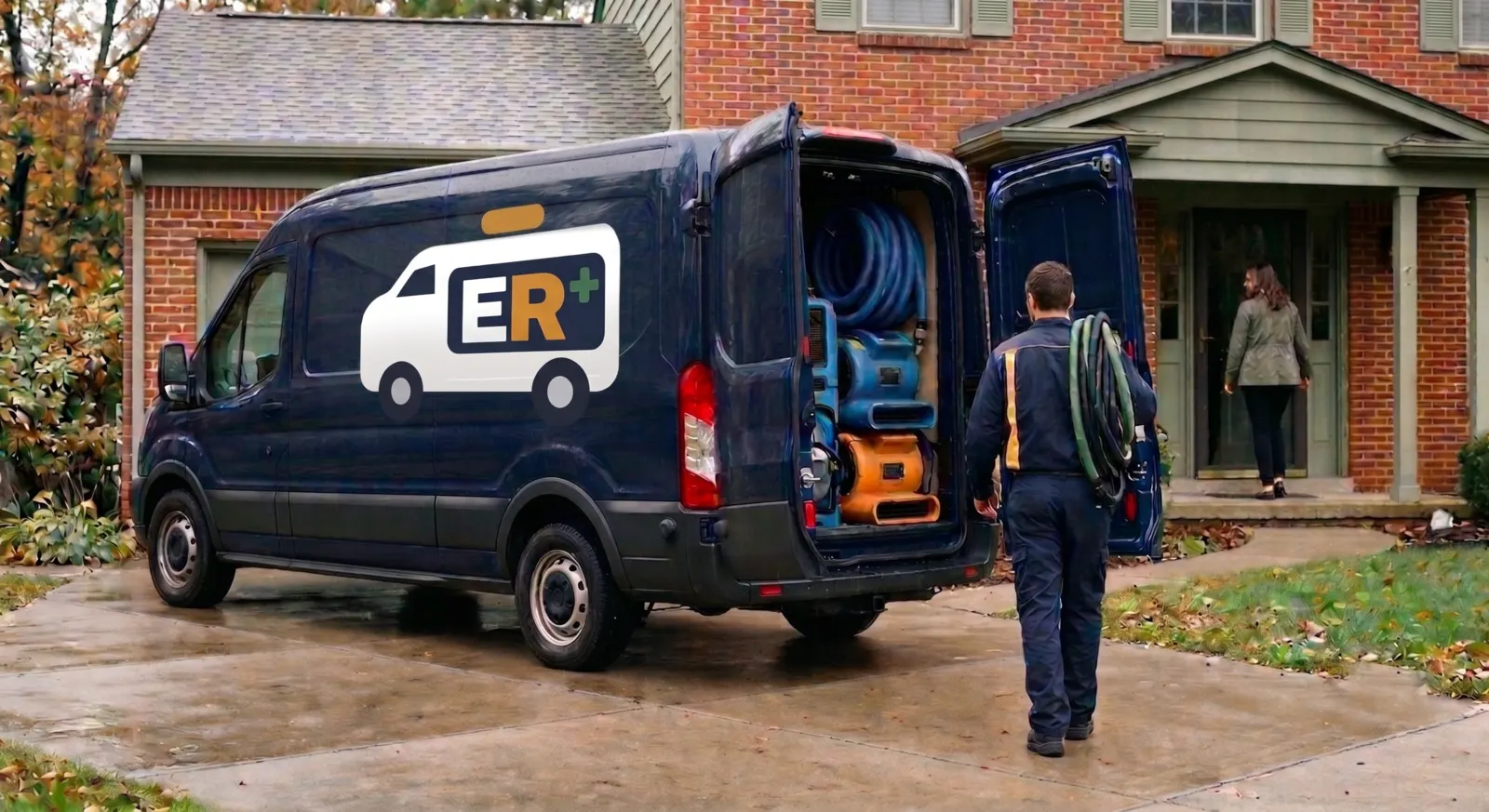
What happens when you call
-
Tell us what happened. 30 seconds - what burned and whether the home is secure.
-
You're connected with a local restoration crew while you're on the line.
-
The crew confirms timing and your arrival time - board-up comes first if the house is open.
What New York crews handle
What's different in New York?
New York's pre-war stock fails in New York ways - aging risers and radiator lines burst inside walls, and the upstairs neighbor's overflow becomes your ceiling collapse. Basement and cellar apartments flood fast when cloudbursts overwhelm the sewers, as Ida proved in 2021, and hard freezes still catch pipes in uninsulated shafts.
In New York, sudden pipe and appliance failures are standard covered losses; water that backs up from sewers or drains needs its own endorsement. In multifamily buildings, whose policy pays - yours, the neighbor's, or the building's - turns on where the failure happened, so documentation matters double.
Your call goes to a crew based in the New York area. Serving New York, Brooklyn, Queens, The Bronx, Staten Island, Yonkers, Hoboken, and all of the five boroughs.
What to know before repairs in New York
The city's substantial-damage definition covers damage of any origin, so a fire in a flood-zone home can trigger the same 50% market-value test and flood-construction requirements as a storm. Rewiring after a fire is electrical work, which under the city's Administrative Code must be done by or under a DOB-licensed master electrician. Replacing or relocating gas piping is work for a licensed master plumber, even when no permit is needed. Ask to see the license, and any DOB permit, before work starts.
Common questions
Can we stay in the house?
Depends on smoke spread and structural safety - the crew tells you straight after inspection. If you can't, most policies pay for temporary housing (loss-of-use coverage).
Is fire damage covered by insurance?
Typically yes. Fire is a core homeowner's peril, and coverage usually includes smoke damage, water from firefighting, board-up, and rebuilding, subject to your limits and deductible - check your declarations page for those. Ask the contractor about documentation and coordination with your adjuster.
Should I start cleaning up myself?
It's best to wait on soot cleanup. Wiping soot the wrong way can drive it deeper, and moving debris before photos may reduce what your claim can show. Waiting on cleanup doesn't mean delaying safe steps to prevent further damage, like board-up or tarping once it's safe. Photograph first.