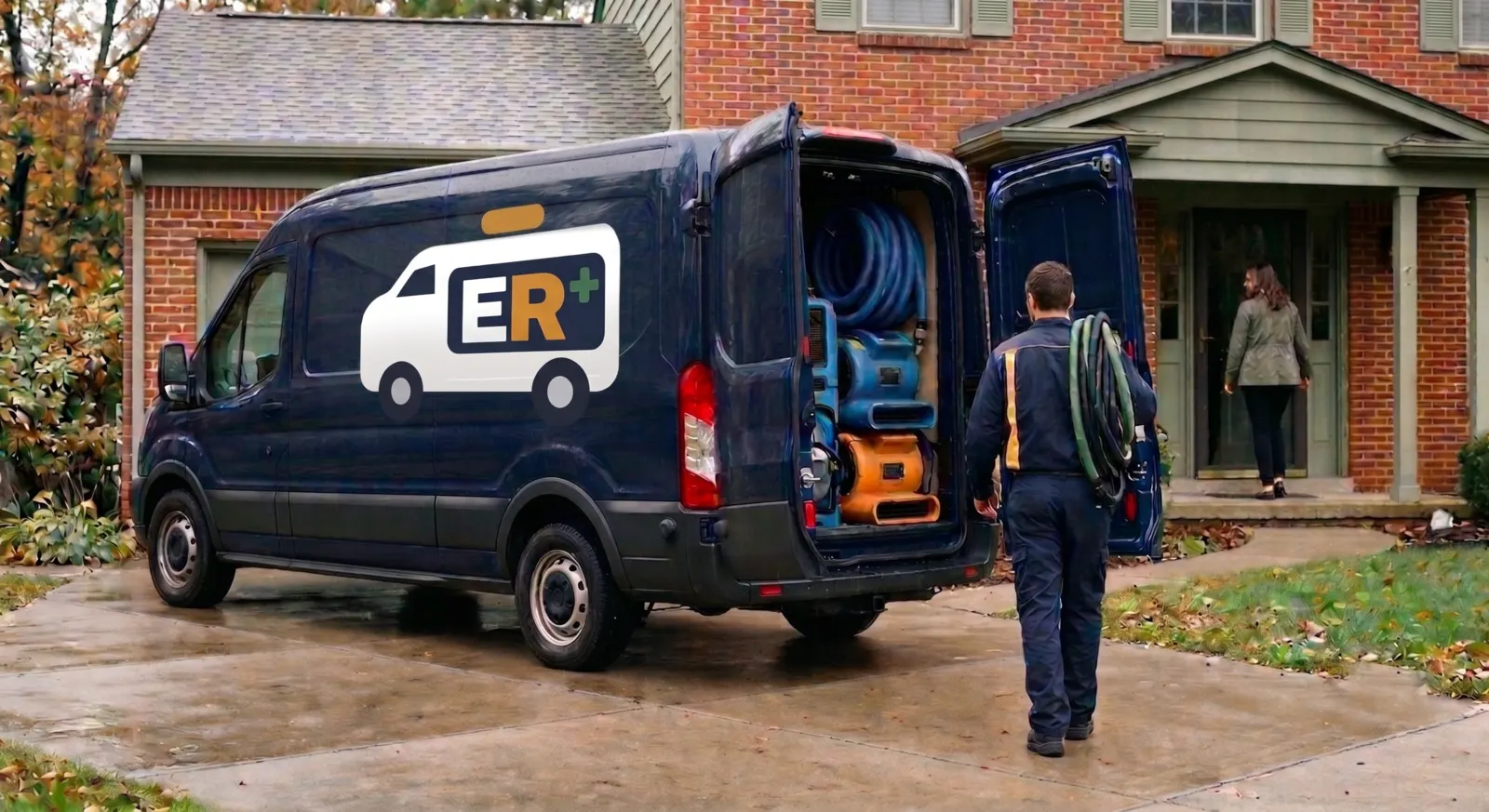
What happens when you call
-
Tell us what happened. 30 seconds - what burned and whether the home is secure.
-
You're connected with a local restoration crew while you're on the line.
-
The crew confirms timing and your arrival time - board-up comes first if the house is open.
What Washington crews handle
What's different in Washington?
DC rowhouses put finished living space below grade, and the city's older combined sewers back up into those basements when summer downpours hit. English basements flood street-first, flat roofs pond, and the region's swampy humidity means anything left damp grows mold quickly - especially behind plaster walls that dry slowly.
District policies cover sudden pipe and appliance failures; water backing up from sewers or drains - the classic DC basement loss - needs its own endorsement. Rising street water is flood insurance, a separate policy, even when it only reaches the areaway door.
Your call goes to a crew based in the Washington area. Serving Washington, Arlington, Alexandria, Bethesda, Silver Spring, Hyattsville, and all of the District.
Common questions
Can we stay in the house?
Depends on smoke spread and structural safety - the crew tells you straight after inspection. If you can't, most policies pay for temporary housing (loss-of-use coverage).
Is fire damage covered by insurance?
Typically yes. Fire is a core homeowner's peril, and coverage usually includes smoke damage, water from firefighting, board-up, and rebuilding, subject to your limits and deductible - check your declarations page for those. Ask the contractor about documentation and coordination with your adjuster.
Should I start cleaning up myself?
It's best to wait on soot cleanup. Wiping soot the wrong way can drive it deeper, and moving debris before photos may reduce what your claim can show. Waiting on cleanup doesn't mean delaying safe steps to prevent further damage, like board-up or tarping once it's safe. Photograph first.