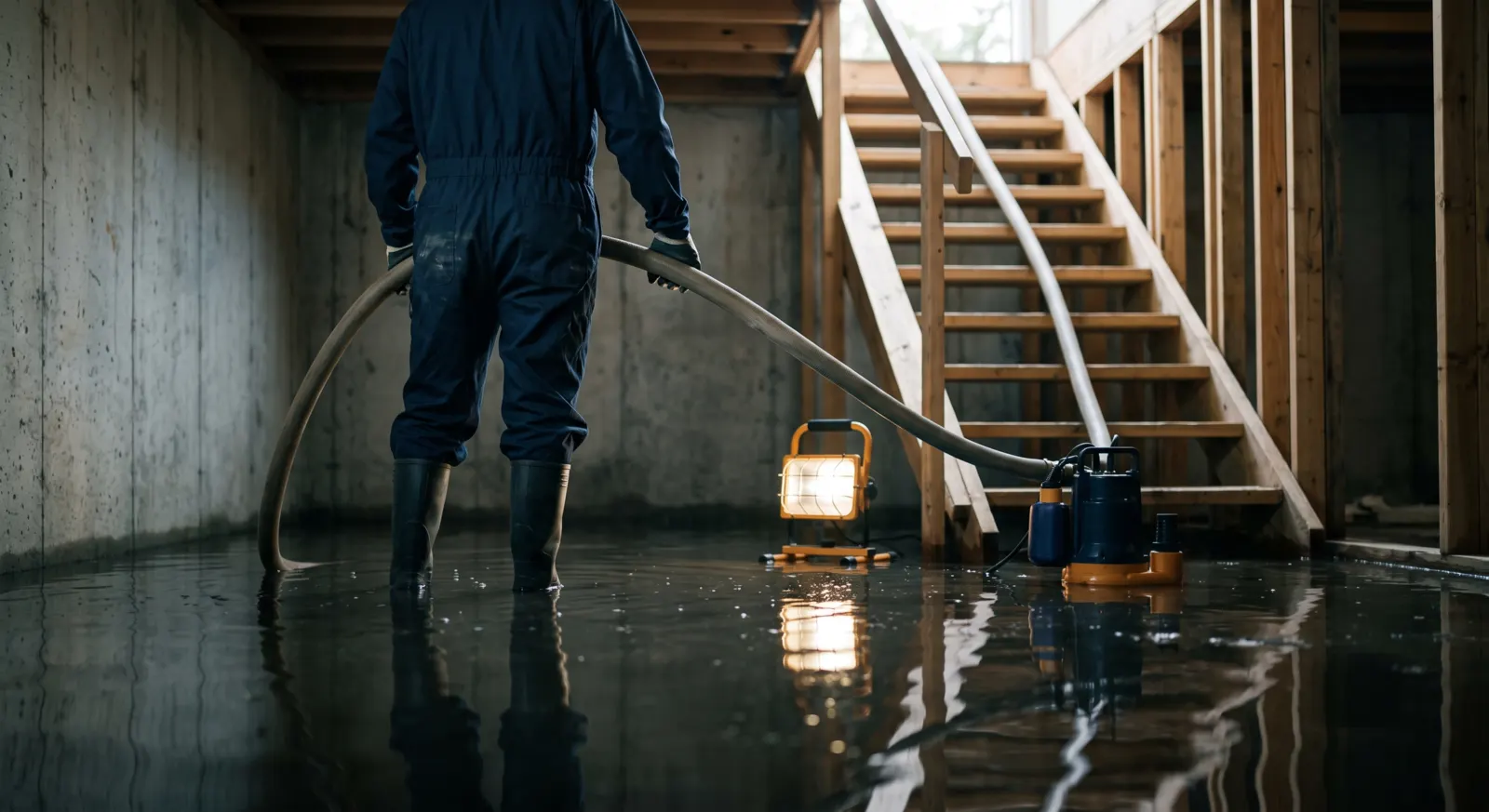
Signs you need a crew now
- More than an inch of standing water - anywhere
- Water rising through the floor drain or wall cracks
- Sump pump dead, tripped, or can't keep up
- A sewage smell - that's contaminated water, don't touch it
What happens when you call
-
Tell us what happened. 30 seconds - how deep, and where it's coming from.
-
You're connected with a local restoration crew while you're on the line.
-
The crew confirms timing and sets your arrival time with you directly.
Why this one can't wait
Basement walls and slab soak up gallons you can't see, and mold gets established in 24-48 damp hours. Every hour underwater moves more of your stuff from "salvageable" to "loss."
And a deeply flooded basement has to be drained slowly - empty it too fast and groundwater pressure can crack the foundation. That judgment call is the crew's job, not yours. More detail in the salvage guide.
Local to Davidson County
Nashville floods fast - the 2010 and 2021 events proved how quickly creeks take whole neighborhoods, and ordinary thunderstorms flash-flood the low spots every year. Tornado season brings roof and structural damage, and the metro's fast-built growth stock runs slab foundations and attic plumbing that hard freezes catch off guard.
Tennessee policies treat wind and storm openings as standard perils; rising creek or street water is flood insurance, a separate policy many Nashville homeowners learned about the hard way in 2010. Freeze-bursts are covered when the home was reasonably heated.
Serving Nashville, Franklin, Brentwood, Hendersonville, Murfreesboro, Smyrna, and all of Davidson County.
Flooded basement questions
Can't I just pump it out myself?
A few inches of clean water with the power off - maybe. Deep water needs a slow, staged drain-down so the foundation isn't damaged, plus extraction from the slab and walls a shop vac can't touch.
Is basement flooding covered by insurance?
A burst pipe is typically covered by a homeowner's policy. Surface flooding is typically covered by flood insurance. Sewer backup is typically covered only with a sewer or water backup endorsement. Groundwater seepage is generally not covered by either, unless it was caused by a covered flood event. Review your policy, including endorsements. See the coverage guide.
What about the furnace and water heater?
Don't relight or power anything that took water - the crew has them inspected. Submerged gas valves and controls are typically replaced, not dried.
Creek flooding took the bottom floor - homeowner's or flood?
Rising surface water from outside is typically covered by flood insurance, not a homeowner's policy. Wind-driven rain through storm damage, or a burst pipe, is typically a homeowner's claim. Which way the water entered often decides which policy responds, so photograph entry points and water lines.