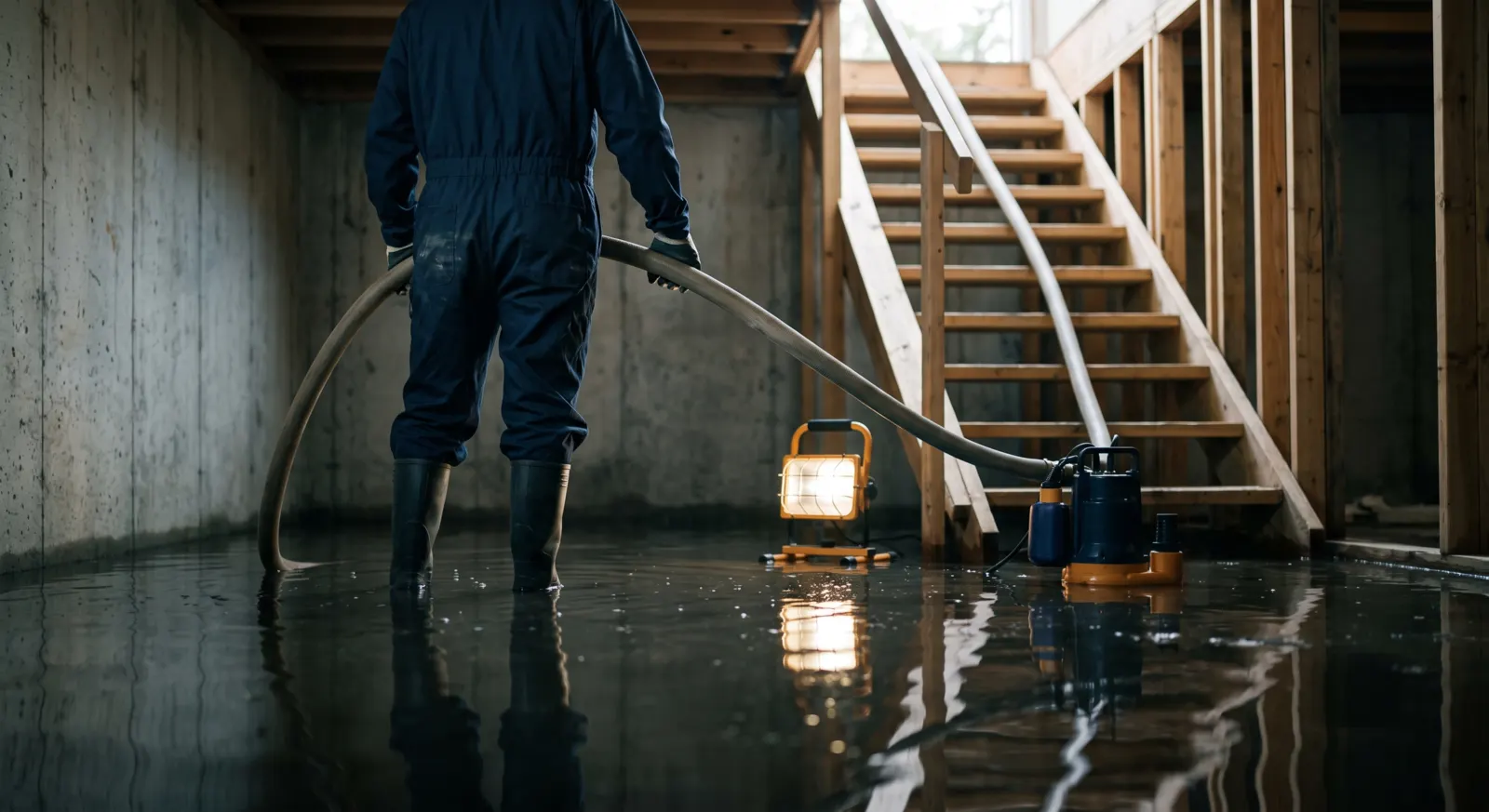
Signs you need a crew now
- More than an inch of standing water - anywhere
- Water rising through the floor drain or wall cracks
- Sump pump dead, tripped, or can't keep up
- A sewage smell - that's contaminated water, don't touch it
What happens when you call
-
Tell us what happened. 30 seconds - how deep, and where it's coming from.
-
You're connected with a local restoration crew while you're on the line.
-
The crew confirms timing and sets your arrival time with you directly.
Why this one can't wait
Basement walls and slab soak up gallons you can't see, and mold gets established in 24-48 damp hours. Every hour underwater moves more of your stuff from "salvageable" to "loss."
And a deeply flooded basement has to be drained slowly - empty it too fast and groundwater pressure can crack the foundation. That judgment call is the crew's job, not yours. More detail in the salvage guide.
Local to Hennepin County
Minneapolis winters are the real thing: weeks below zero find every uninsulated pipe run, ice dams build on every roofline, and the spring melt tests every sump pump in a metro where finished basements are the norm. The freeze-thaw cycle heaves foundations enough to open seepage paths, and summer brings the thunderstorms that overwhelm them.
Northern policies cover sudden freeze-burst pipes as long as the home was reasonably heated - and ice-dam water damage to the interior is typically covered even though the roof maintenance itself may not be. Sewer and sump backup need their own endorsement.
Serving Minneapolis, St. Paul, Bloomington, Edina, Eden Prairie, Maple Grove, and all of Hennepin County.
Flooded basement questions
Can't I just pump it out myself?
A few inches of clean water with the power off - maybe. Deep water needs a slow, staged drain-down so the foundation isn't damaged, plus extraction from the slab and walls a shop vac can't touch.
Is basement flooding covered by insurance?
A burst pipe is typically covered by a homeowner's policy. Surface flooding is typically covered by flood insurance. Sewer backup is typically covered only with a sewer or water backup endorsement. Groundwater seepage is generally not covered by either, unless it was caused by a covered flood event. Review your policy, including endorsements. See the coverage guide.
What about the furnace and water heater?
Don't relight or power anything that took water - the crew has them inspected. Submerged gas valves and controls are typically replaced, not dried.
We were away and pipes froze - are we covered?
Typically yes, if you followed your policy's freeze precautions while away - usually maintaining heat, or shutting off the water and draining the pipes. If the heat was on, say so clearly. Review your policy, including endorsements. Document the break.