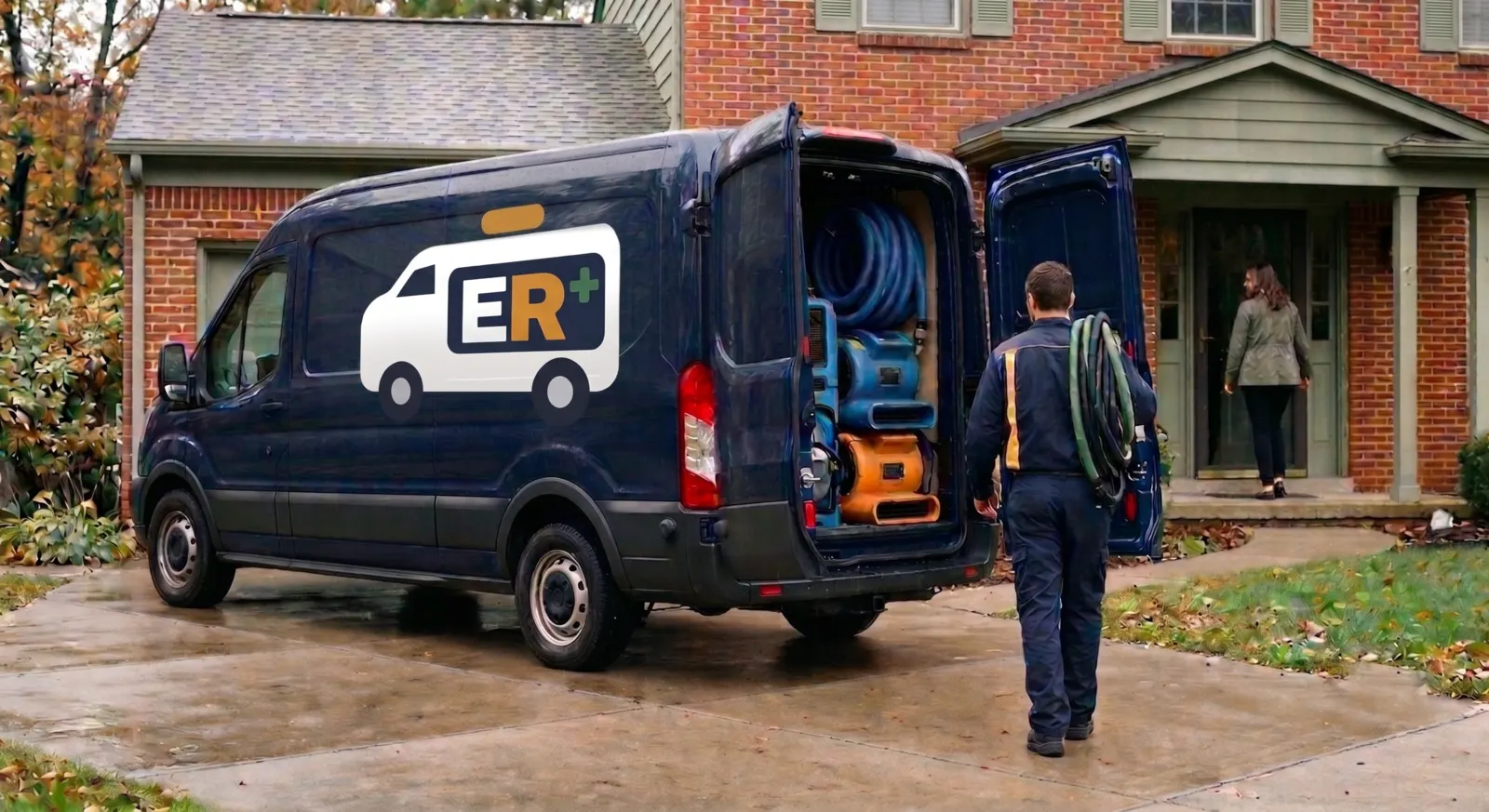
What happens when you call
-
Tell us what you're seeing. 30 seconds - where it is and how far it's spread.
-
You're connected with a local mold remediation crew while you're on the line.
-
The crew confirms your inspection appointment and sets the time with you directly.
What Philadelphia crews handle
What's different in Philadelphia?
Philadelphia's rowhomes share party walls, so one burst pipe routinely becomes two houses' problem - water travels along joists straight into the neighbor's ceiling. Original cast-iron stacks and galvanized supply lines are at end of life across whole blocks, basements sit below grade, and hard freezes find the pipes in unheated cellars first.
Pennsylvania policies cover sudden failures including freeze-bursts when the home was reasonably heated. Sewer and drain backup - a common Philadelphia basement claim - needs its own endorsement, and party-wall losses get sorted between insurers after each home documents its own damage.
Your call goes to a crew based in the Philadelphia area. Serving Philadelphia, Camden, Cherry Hill, Upper Darby, Norristown, Bensalem, and all of Philadelphia County.
What to know before repairs in Philadelphia
Pennsylvania's Department of Health says there are no federal or Pennsylvania state regulations about mold, so there is no state mold license or clearance certificate to ask for. Philadelphia's Health Department does not inspect homes for mold. That puts more weight on your own paperwork: a written scope of work, photos of the damage and the moisture source, and any lab results. State guidance says a person without health problems can clean an area under about 10 square feet; for larger areas, or with asthma, COPD or pregnancy, it says to hire a contractor. Mold returns unless the water problem is fixed. Renters should report leaks and damp areas to the landlord, though the state notes Pennsylvania has no law on landlord mold duties. Anyone can report a leaking roof, cracked wall or plumbing problem to Philly 311.
Common questions
Should I test first or go straight to removal?
If mold is visible and the moisture source is obvious, go straight to remediation. Test first when mold is hidden, symptoms don't match what you can see, or you need documentation for a claim.
Is mold really that dangerous?
It's a health concern worth taking seriously - especially for kids, older adults, and anyone with asthma or allergies. Removal ends the exposure either way.
Is mold remediation covered by insurance?
Mold remediation may be covered when the mold resulted from a covered sudden water loss, often up to a separate limit. Coverage depends on the cause and your policy's mold exclusions, endorsements and limits. A covered water loss does not automatically establish coverage for mold remediation. Check your declarations page for any mold limit.