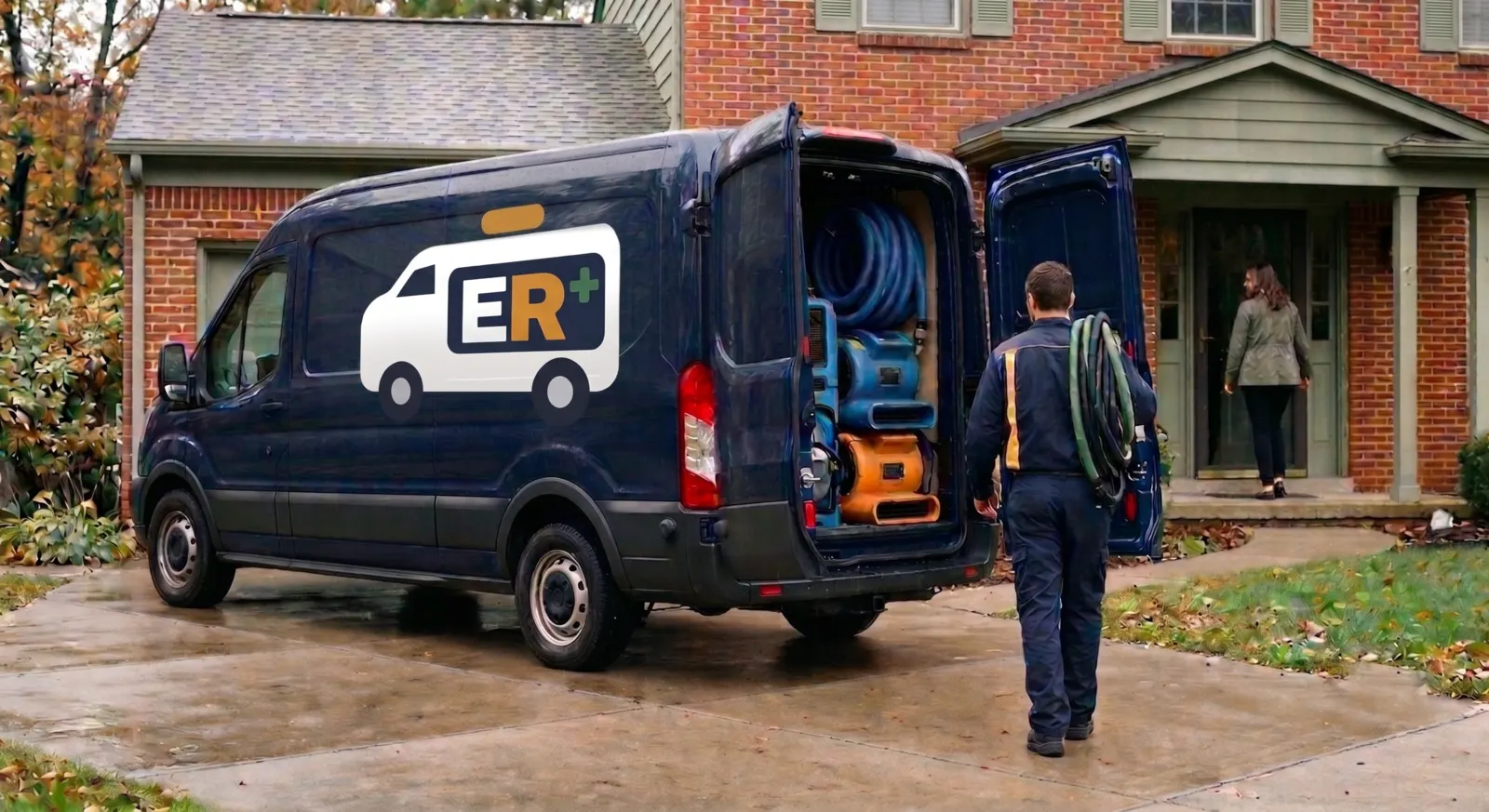
What happens when you call
-
Tell us what you're seeing. 30 seconds - where it is and how far it's spread.
-
You're connected with a local mold remediation crew while you're on the line.
-
The crew confirms your inspection appointment and sets the time with you directly.
What Columbus crews handle
What's different in Columbus?
Columbus mixes both failure modes: fast-built growth suburbs with attic plumbing and finished basements, and older in-town stock with supply lines at end of life. Hard freezes burst pipes on both sides of that line, spring thunderstorms test sump pumps across Franklin County, and summer humidity keeps anything left damp growing.
In Ohio the coverage that catches homeowners out is sewer and sump backup - both need their own endorsement, an add-on many policies skip. Sudden pipe and appliance failures fall under the standard policy; frozen pipes are covered when the home was reasonably heated.
Your call goes to a crew based in the Columbus area. Serving Columbus, Dublin, Westerville, Grove City, Hilliard, Reynoldsburg, and all of Franklin County.
What to know before repairs in Columbus
Ohio's contractor licensing law lists five trades, and mold assessment and remediation are not among them. With no state mold certificate, your own paperwork is the record: a written scope, moisture readings before and after, photos and any inspection report. It matters at sale. Ohio's Residential Property Disclosure Form asks sellers about water leakage, moisture damage from flooding, sewer backup or leaking pipes, whether the home was inspected for mold, and whether there is an inspection report and any remediation. Renters have a separate path. Under Ohio law a tenant who is current on rent can give the landlord written notice, and if repairs are not made within a reasonable time or 30 days, whichever is sooner, may deposit rent with the court. Landlords with three or fewer units who say so in writing, and student housing, are exempt. Housing code complaints go through Columbus 311.
Common questions
Should I test first or go straight to removal?
If mold is visible and the moisture source is obvious, go straight to remediation. Test first when mold is hidden, symptoms don't match what you can see, or you need documentation for a claim.
Is mold really that dangerous?
It's a health concern worth taking seriously - especially for kids, older adults, and anyone with asthma or allergies. Removal ends the exposure either way.
Is mold remediation covered by insurance?
Mold remediation may be covered when the mold resulted from a covered sudden water loss, often up to a separate limit. Coverage depends on the cause and your policy's mold exclusions, endorsements and limits. A covered water loss does not automatically establish coverage for mold remediation. Check your declarations page for any mold limit.