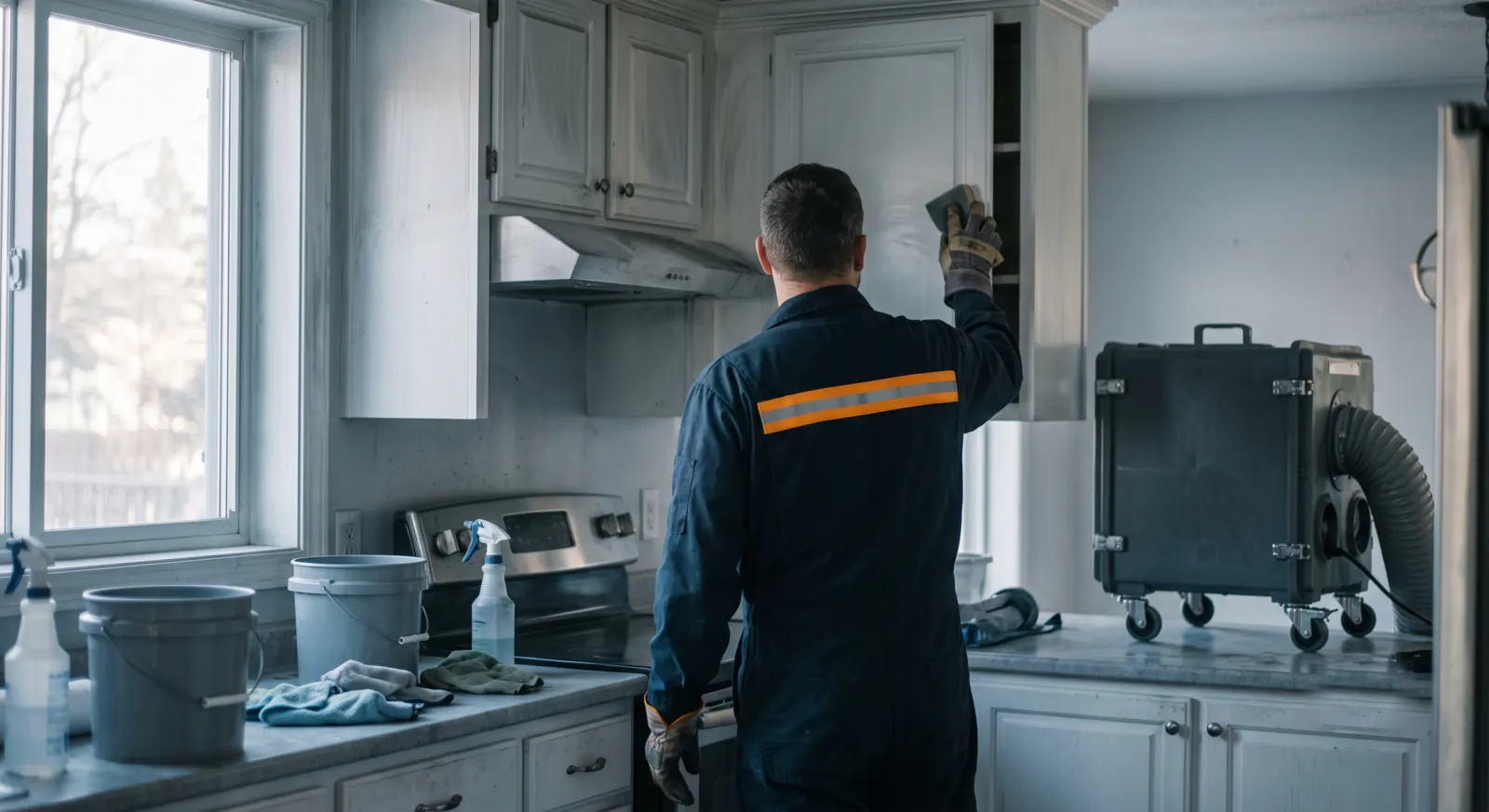
Signs you need a crew now
- Soot film on walls, counters, or electronics
- Smoke smell that returns every time the HVAC kicks on
- A kitchen, garage, or nearby-structure fire - even a small one
- Scratchy throat or headaches indoors since the smoke
What happens when you call
-
Tell us what happened. 30 seconds - what burned and how far the smoke got.
-
You're connected with a local restoration crew while you're on the line.
-
The crew confirms timing and sets your arrival time with you directly.
Why airing it out doesn't work
Smoke odor isn't in the air - it's in the drywall, insulation, carpet, and ductwork. Open windows dilute it for an afternoon; the materials keep releasing it for months.
Crews clean soot before it permanently etches finishes, then neutralize odor at the source - HEPA air scrubbing, thermal fogging or ozone treatment, and duct cleaning where the smoke traveled.
Local to Cook County
Chicago basements are deep and usually finished - and much of Cook County drains through combined sewers that back up into them during heavy rain. Freeze-thaw cycles burst pipes in uninsulated exterior walls, ice dams push meltwater under roofs, and a dead sump or ejector pit turns an ordinary storm into a flooded basement in an hour.
In the Chicago area the coverage that surprises homeowners most is sewer backup - it's only covered with a water/sewer backup endorsement, an add-on many policies skip despite the combined sewer system. Check your declarations page before the next heavy rain.
Serving Chicago, Evanston, Cicero, Oak Park, Skokie, Berwyn, and all of Cook County.
Smoke & odor questions
The fire was small - do I really need this?
Small fires make a surprising amount of smoke, and soot is acidic - it keeps damaging finishes and electronics until it's cleaned. An inspection tells you how far it actually traveled.
Is smoke damage covered by insurance?
Typically yes. Smoke damage from a fire is usually covered, including cleaning, soot removal, and odor treatment, subject to your limits and deductible - check your declarations page for those. Ask the contractor about documentation and coordination with your adjuster.
Can clothes and furniture be saved?
Usually - fabrics go through specialized ozone or wash treatment, and solid furniture cleans up well. Heavily charred or melted items are documented for the claim instead.