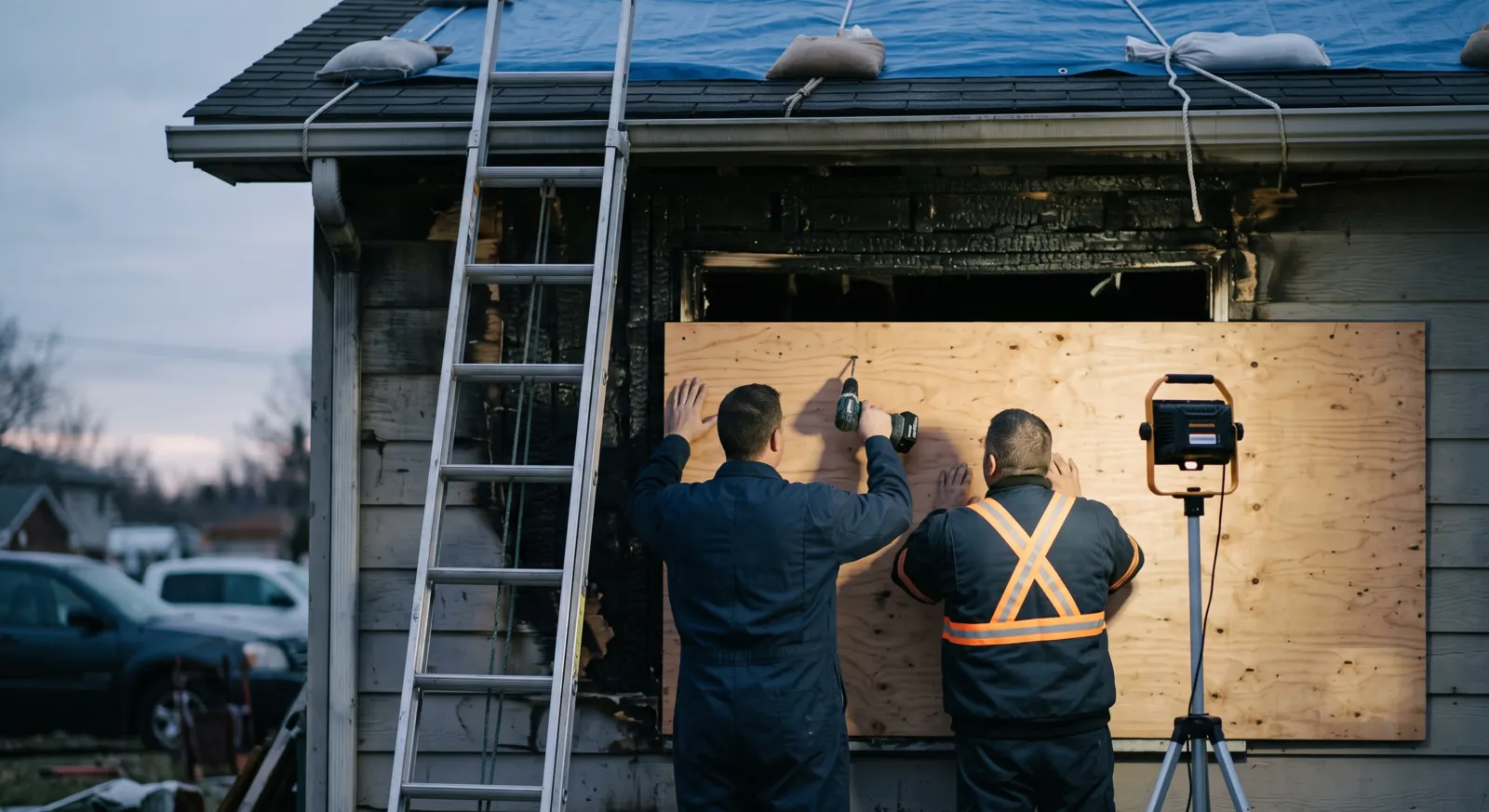
What needs to happen first
- Board-up and roof tarping - the policy requires securing the property
- Extraction of firefighting water before it becomes a second loss
- Soot cleanup within days - it's acidic and keeps etching finishes
- Full documentation before anything is moved - your claim depends on it
What happens when you call
-
Tell us what happened. 30 seconds - what burned and whether the home is secure.
-
You're connected with a local restoration crew while you're on the line.
-
The crew confirms timing and your arrival time - board-up comes first if the house is open.
One crew, start to finish
Fire damage is really three losses at once - burn, smoke, and the water used to put it out. Handling them separately means three contractors arguing over one claim.
A restoration crew runs the whole sequence - secure, dry, clean, deodorize, rebuild - and documents each phase for your insurer, who covers fire losses as core homeowner's coverage.
Local to Cuyahoga County
Cleveland's century homes and doubles carry original galvanized lines and stone foundations, and lake-effect winters test both - deep freezes burst pipes in uninsulated walls while ice dams work the rooflines. The metro's older combined sewers back up into basements when storms train off Lake Erie, and spring melt keeps sump pumps honest.
In Ohio the coverage that catches homeowners out is sewer and sump backup - both need their own endorsement, an add-on many policies skip. Sudden pipe and appliance failures fall under the standard policy; frozen pipes are covered when the home was reasonably heated.
Serving Cleveland, Parma, Lakewood, Euclid, Strongsville, Mentor, and all of Cuyahoga County.
Fire damage questions
Can we stay in the house?
Depends on smoke spread and structural safety - the crew tells you straight after inspection. If you can't, most policies pay for temporary housing (loss-of-use coverage); ask your adjuster.
Is fire damage covered by insurance?
Typically yes. Fire is a core homeowner's peril, and coverage usually includes smoke damage, water from firefighting, board-up, and rebuilding, subject to your limits and deductible - check your declarations page for those. Ask the contractor about documentation and coordination with your adjuster.
Should I start cleaning up myself?
It's best to wait on soot cleanup. Wiping soot the wrong way can drive it deeper, and moving debris before photos may reduce what your claim can show. Waiting on cleanup doesn't mean delaying safe steps to prevent further damage, like board-up or tarping once it's safe. Photograph first.